LASIK — laser-assisted in situ keratomileusis — has become the most commonly performed elective surgery in the world, with more than 40 million procedures completed in the United States alone since its FDA approval in 1999. The appeal is straightforward: a 15-minute procedure that can eliminate or dramatically reduce dependence on glasses and contact lenses, often with visual improvement noticeable within hours. Patient satisfaction rates consistently exceed 96 percent in large-scale studies, making LASIK one of the most successful elective procedures in all of medicine.
Yet LASIK is not a universal solution. Not everyone is a candidate, outcomes vary based on individual eye characteristics, and the procedure carries risks that deserve honest assessment before committing. The gap between marketing-driven expectations and clinical reality leads to disappointment for the small but notable minority of patients who experience complications or unsatisfying results. Understanding what LASIK can and cannot do, who benefits most, and what the real risks look like enables informed decision-making rather than wishful thinking.
How LASIK Works
Vision problems corrected by LASIK — nearsightedness, farsightedness, and astigmatism — all result from imperfections in the eye's focusing system. In a perfectly shaped eye, the cornea and lens focus incoming light precisely onto the retina at the back of the eye, producing a clear image. When the cornea's curvature does not match the eye's length, light focuses in front of or behind the retina, producing blur.
LASIK corrects these focusing errors by reshaping the cornea — the clear dome-shaped tissue covering the front of the eye. By removing microscopic amounts of corneal tissue with an excimer laser, the surgeon adjusts the cornea's curvature to redirect light onto the retina. For nearsightedness, the center of the cornea is flattened. For farsightedness, the peripheral cornea is flattened, steepening the center. For astigmatism, irregularities in the cornea's curvature are smoothed.
The procedure involves two key steps. First, a thin flap is created in the outer layer of the cornea — either with a microkeratome blade or, more commonly in modern practice, with a femtosecond laser. This flap is lifted to expose the underlying corneal tissue. Second, the excimer laser removes precisely calculated amounts of tissue from this exposed surface, reshaping the cornea according to the treatment plan. The flap is then repositioned, where it adheres naturally without sutures.
Candidacy Requirements
LASIK candidacy depends on several eye health and personal factors that a comprehensive pre-operative evaluation assesses.
Prescription Stability
The eyeglass or contact lens prescription must be stable — meaning no significant change — for at least one to two years before LASIK. Eyes that are still changing will continue to change after surgery, potentially negating the correction. This requirement effectively excludes most people under 18, whose eyes are still developing, and some young adults in their early twenties whose prescriptions have not yet stabilized.
Prescription Range
LASIK most reliably corrects nearsightedness up to approximately -8 to -12 diopters, farsightedness up to +4 to +6 diopters, and astigmatism up to 5 to 6 diopters. Prescriptions at the higher end of these ranges are treatable but may produce less predictable outcomes and higher rates of regression (partial return of the original prescription). Very high prescriptions may be better served by alternative procedures like implantable collamer lenses.
Corneal Thickness and Shape
LASIK removes corneal tissue, so adequate corneal thickness is essential to maintain structural integrity after the procedure. The pre-operative evaluation includes precise measurement of corneal thickness and detailed mapping of corneal topography — the surface shape of the cornea — to identify irregularities that could compromise outcomes.
Keratoconus, a condition where the cornea progressively thins and bulges into a cone shape, is an absolute contraindication to LASIK. Even subclinical keratoconus — early-stage disease without obvious symptoms — can be unmasked or accelerated by LASIK, making thorough screening essential.
Pupil Size
Large pupils, particularly those that dilate significantly in dim light, increase the risk of post-LASIK night vision symptoms including halos, glare, and starbursts around lights. Modern laser systems with larger treatment zones have reduced this concern compared to earlier technology, but pupil size remains a factor in the pre-operative assessment.
General Eye Health
Active eye diseases including glaucoma, cataracts, severe dry eye, corneal disease, and retinal disorders may disqualify candidates or require treatment before LASIK can be considered. The pre-operative examination includes comprehensive assessment of all eye structures to identify conditions that could affect surgical outcomes.
Overall Health
Autoimmune conditions including rheumatoid arthritis, lupus, and Sjogren's syndrome can impair corneal healing and are relative contraindications. Diabetes, particularly poorly controlled diabetes, increases the risk of healing complications. Pregnancy and nursing alter hormonal balances that affect corneal shape and refraction, so LASIK is deferred until after these periods have ended and the prescription has re-stabilized.
The American Academy of Ophthalmology provides detailed guidance on candidacy criteria and recommends thorough evaluation by an experienced refractive surgeon before proceeding.
The Procedure Experience
Pre-Operative Preparation
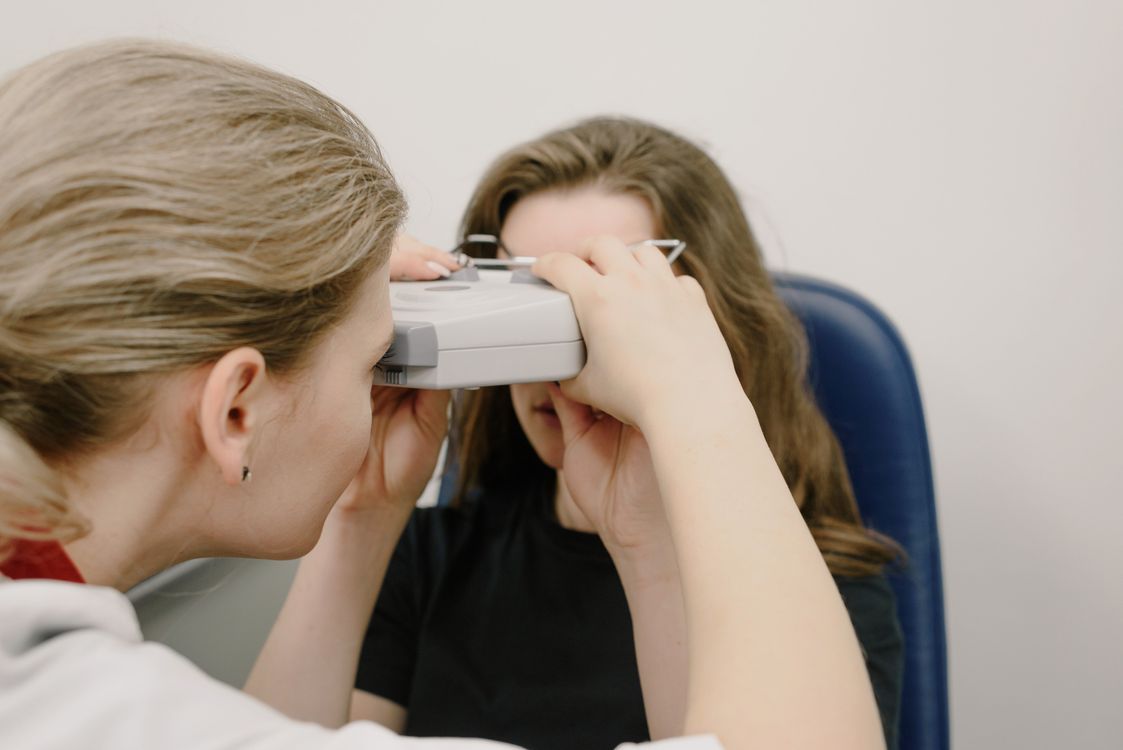
The evaluation appointment, typically lasting one to two hours, includes a complete eye examination, corneal topography mapping, corneal thickness measurement, pupil size assessment, tear film evaluation, and discussion of expectations and risks. Contact lens wearers must discontinue lenses for a specified period before the evaluation — typically one to two weeks for soft lenses and three to four weeks for rigid gas permeable lenses — because contacts temporarily alter corneal shape and can produce inaccurate measurements.
Day of Surgery
The entire surgical experience, from walking into the laser suite to walking out, typically takes less than 30 minutes, with the actual laser treatment lasting only 30 to 60 seconds per eye. Numbing drops eliminate pain during the procedure. A mild sedative may be offered to reduce anxiety.
The patient lies on a reclining chair beneath the laser. A small device holds the eyelids open, preventing blinking. A suction ring briefly stabilizes the eye during flap creation — this produces a sensation of pressure and temporary dimming of vision that lasts approximately 20 seconds and represents the most uncomfortable moment of the entire procedure.
After the flap is created and lifted, the patient fixates on a target light while the excimer laser reshapes the cornea. The laser tracks eye movements and adjusts in real time, pausing if the eye moves beyond the tracking range. Patients often report hearing a clicking sound during the laser application and noticing a mild odor, which is normal and harmless.
The flap is repositioned, smoothed into place, and allowed to begin adhering — a process that takes only minutes. The entire procedure for both eyes is typically completed in under 20 minutes.
What Patients Feel
The most common description of the LASIK experience is "uncomfortable but not painful." The pressure during suction ring application, the brief blur during flap creation, and the awareness of lights and movements near the eye produce discomfort and anxiety but not pain. Most patients express surprise at how quick and manageable the experience was compared to their expectations.
Recovery Timeline
Immediately after surgery, vision is blurry, and the eyes may feel gritty, watery, or light-sensitive. Protective shields are placed over the eyes, and the patient is driven home to rest for the remainder of the day. Most patients notice dramatic improvement in vision within the first few hours, though some haziness is normal.
The first follow-up appointment, typically the day after surgery, confirms that the flaps are properly positioned and healing has begun. Most patients are cleared to drive and return to work within one to two days. Vision continues to stabilize over three to six months, with the most rapid improvement occurring in the first week.
Post-operative restrictions include avoiding rubbing the eyes (which could dislodge the flap) for several weeks, wearing protective shields during sleep for the first week, avoiding swimming, hot tubs, and contact sports for two to four weeks, and using prescribed antibiotic and anti-inflammatory eye drops as directed.
Dry eye is the most common post-LASIK symptom, affecting a majority of patients to some degree during the first three to six months. LASIK temporarily disrupts the corneal nerves that regulate tear production, reducing tear output until the nerves regenerate. The National Eye Institute advises that artificial tears used frequently during this period provide comfort while natural tear production recovers.
Realistic Expectations for Results
Understanding what LASIK can realistically deliver prevents the disappointment that comes from expecting perfection.
The goal of LASIK is to reduce dependence on corrective lenses, not necessarily to achieve absolute perfect vision. Approximately 90 to 95 percent of patients achieve 20/20 vision or better after LASIK, and roughly 99 percent achieve 20/40 or better — the visual acuity threshold for driving without corrective lenses in most states.
Enhancement procedures — a second LASIK treatment to fine-tune results — may be necessary in approximately 5 to 10 percent of patients, particularly those with higher initial prescriptions. Enhancements are typically performed three to six months after the initial procedure, once the eyes have stabilized.
Presbyopia — the age-related loss of near focusing ability that typically begins in the mid-forties — is not addressed by standard LASIK. Patients who achieve excellent distance vision through LASIK will still need reading glasses as presbyopia develops, unless a monovision approach (correcting one eye for distance and the other for near) is chosen.
Night vision symptoms including halos, glare, and starbursts around lights are common in the early post-operative period and typically resolve or diminish significantly within three to six months. A small percentage of patients experience persistent night vision symptoms that, while rarely debilitating, can be noticeable during nighttime driving.
Potential Risks and Complications
No surgical procedure is risk-free, and honest assessment of LASIK risks is essential for informed consent.
Dry eye, as noted, affects the majority of patients temporarily and a small percentage persistently. Patients with pre-existing dry eye are at higher risk of worsening, which is why dry eye screening is a critical part of the pre-operative evaluation.
Under-correction or over-correction occurs when the laser removes slightly more or less tissue than needed, resulting in residual prescription. Mild residual error may be acceptable to the patient; more significant error may require enhancement surgery or continued use of glasses for specific activities.
Flap complications — wrinkling, displacement, or incomplete creation — are rare with modern femtosecond laser technology but represent the most procedure-specific risk category. Careful adherence to post-operative instructions, particularly avoiding eye rubbing, minimizes the risk of flap displacement during healing.
Corneal ectasia — progressive thinning and bulging of the cornea after surgery — is the most serious potential complication. It occurs when LASIK is performed on corneas that are too thin, have undetected keratoconus susceptibility, or when excessive tissue is removed. Thorough pre-operative screening including corneal topography and biomechanical assessment has significantly reduced the incidence of this complication.
Infection and inflammation, while rare, can occur with any surgical procedure. The antibiotic and anti-inflammatory drops prescribed after LASIK provide prophylaxis against these complications.
Cost Considerations
LASIK is considered an elective procedure by insurance companies and is rarely covered by standard health insurance plans. The average cost ranges from $2,000 to $3,000 per eye, though prices vary based on technology used, surgeon experience, geographic location, and whether the quoted price includes all follow-up care and potential enhancements.
Beware of unusually low prices that may indicate older technology, less experienced surgeons, or quotes that exclude necessary components like the pre-operative evaluation, surgeon fees, or post-operative care. A comprehensive, all-inclusive price from a reputable surgeon using current technology represents the best value, even if the upfront cost is higher.
Many LASIK centers offer financing plans, and flexible spending accounts and health savings accounts can be used for LASIK expenses. When compared to the lifetime cost of glasses and contact lenses — estimated at $20,000 to $30,000 for the average person — LASIK often represents a financial savings over time in addition to the convenience benefit.
Alternatives to LASIK
PRK (photorefractive keratectomy) removes the surface layer of the cornea rather than creating a flap, making it suitable for patients with thinner corneas or those at higher risk of flap complications (such as people in contact sports). Recovery is slower and more uncomfortable than LASIK, but long-term results are comparable.
SMILE (small incision lenticule extraction) uses a femtosecond laser to create and remove a small disc of corneal tissue through a tiny incision, without creating a flap. This newer technique may offer advantages for dry eye outcomes and corneal biomechanical stability.
Implantable collamer lenses are placed inside the eye rather than reshaping the cornea, offering an option for patients with very high prescriptions, thin corneas, or other characteristics that make LASIK unsuitable. The procedure is reversible — the lens can be removed if needed.
Making Your Decision
The best LASIK outcomes result from honest self-assessment, thorough pre-operative evaluation, realistic expectations, and selection of an experienced surgeon using current technology. A surgeon who screens carefully, declines inappropriate candidates, and sets honest expectations is worth far more than one who promises perfection to everyone who walks through the door.
Schedule consultations with at least two refractive surgeons. Ask about their specific experience, complication rates, technology, and enhancement policies. A surgeon confident in their outcomes will answer these questions openly. One who deflects or provides only positive information may not be the right choice for a procedure that, while highly successful, requires honest risk communication to serve patients well.
Sources and Further Reading
Health and Beyond uses reputable medical and scientific sources where possible. These links support or expand on the topics discussed above.
- The American Academy of Ophthalmologyaao.org
- The National Eye Institutenei.nih.gov