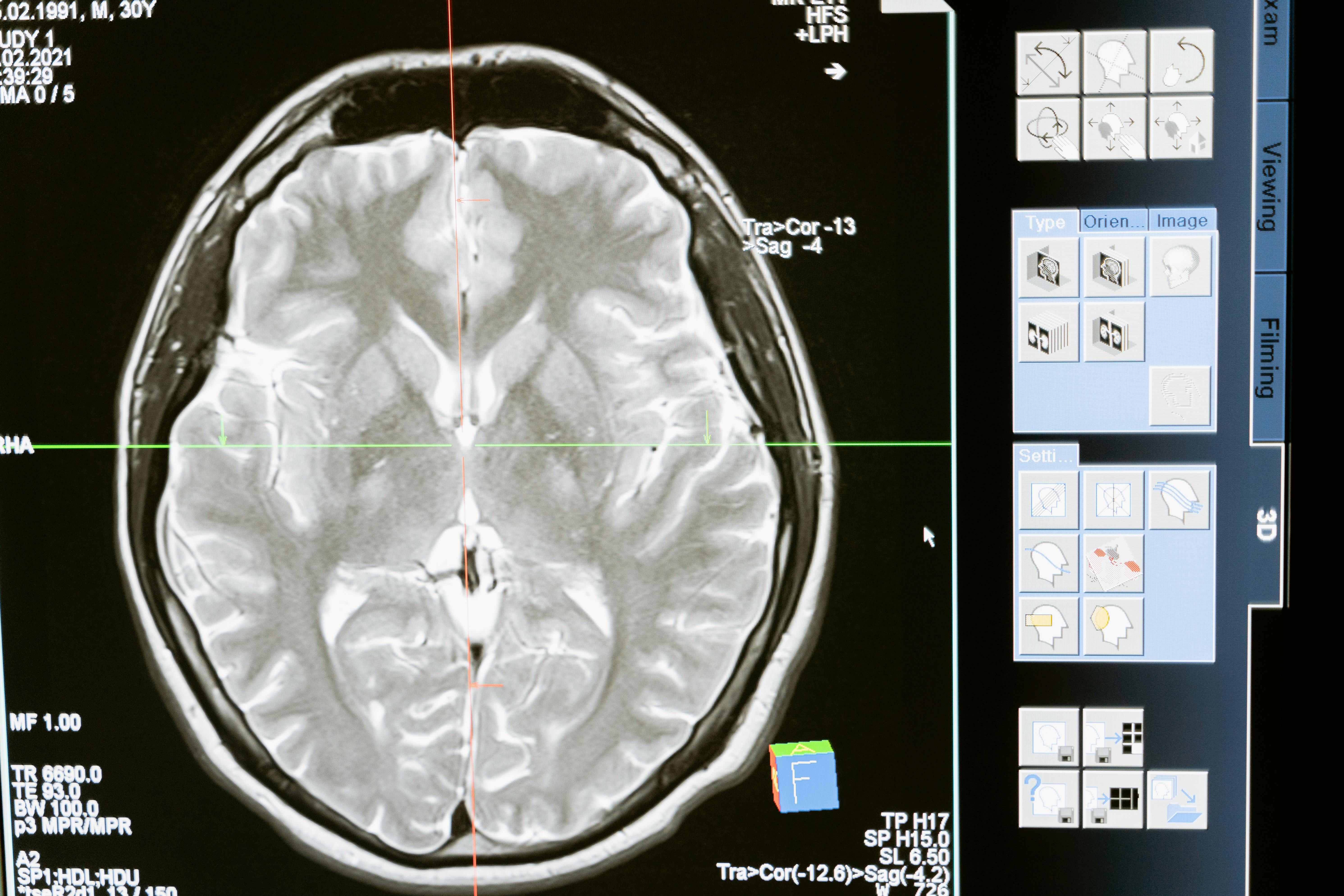
Named for a Turkish dermatologist who described it in 1937, Behcet disease has for centuries been most common in the countries along the ancient Silk Road, from the eastern Mediterranean through central Asia to Japan and Korea. It is rare in North America and northern Europe but not unknown. Behcet is best understood as a systemic vasculitis, an inflammation of blood vessels of every size, that tends to attack mucous membranes, eyes, skin, joints, the gut, the central nervous system, and large vessels. The disease often starts in young adulthood and follows a relapsing, remitting course that can be debilitating in severe forms but is frequently controllable with modern therapy.
The Classic Triad and Beyond
The original clinical hallmarks were recurrent oral ulcers, genital ulcers, and uveitis. These three features still carry the most diagnostic weight, but Behcet is a much broader disease than the triad suggests.
Recurrent oral aphthous ulcers are the most common feature, present in nearly all patients, usually appearing multiple times per year. They are typically round, with a yellow fibrinous base and a sharp red rim, painful, and heal without scarring over one to three weeks.
Genital ulcers are less frequent but highly specific. They appear on the scrotum, penis, vulva, or vagina, are often large and deeper than oral ulcers, and frequently heal with scarring, a clue that helps on later examination even when no active ulcer is present.
Ocular involvement is the single most feared complication. Anterior uveitis, posterior uveitis, and panuveitis can all occur, sometimes with hypopyon, a layer of white cells in the anterior chamber. Retinal vasculitis, especially of the veins, threatens vision. Without aggressive treatment, chronic relapsing ocular inflammation leads to permanent visual impairment or blindness in a significant fraction of affected patients. Men are at particularly high risk for severe eye disease.
Skin, Joints, and Pathergy
Skin findings are varied. Erythema nodosum-like lesions appear on the legs as tender red nodules. Pseudofolliculitis and acneiform lesions, indistinguishable from common acne at first glance, occur on the trunk and limbs. Superficial thrombophlebitis leaves tender cords along veins.
Pathergy is a distinctive phenomenon. A simple needle stick provokes a papule or pustule at the puncture site within twenty-four to forty-eight hours. The test is formalized by pricking the skin in a standardized way and reading the response. Pathergy is more common in patients of Middle Eastern and Asian descent and is less reliable in Europeans and Americans, but when present it strongly supports the diagnosis.
Joint involvement affects about half of patients. It usually takes the form of a nonerosive, intermittent inflammatory arthritis affecting the knees, ankles, wrists, and elbows. Spine involvement is rare.
Vascular Disease: Veins and Arteries
Large vessel vasculitis is a major feature that separates Behcet from most other autoimmune conditions. Both veins and arteries are affected. Deep venous thrombosis is common, often recurrent, and occurs in younger patients without the usual clotting risk factors. Superficial thrombophlebitis, pulmonary artery involvement with thrombosis or aneurysm, and Budd-Chiari syndrome from hepatic vein thrombosis all occur. Pulmonary artery aneurysms are particularly dangerous because they can rupture catastrophically.
Arterial involvement can create aneurysms in the aorta, pulmonary arteries, and peripheral vessels. Because inflammation itself drives thrombus formation, traditional anticoagulation alone is not enough. Immunosuppression to control vessel wall inflammation is the key, with anticoagulation used selectively and cautiously in the presence of aneurysms.
Gastrointestinal Behcet
Abdominal pain, diarrhea, rectal bleeding, and ulceration of the ileocecal region can mimic Crohn disease almost exactly. Distinguishing features help but are not absolute. Ileocecal ulcers in Behcet tend to be deep, round, and relatively few in number. Granulomas are absent. Imaging and colonoscopy with biopsy guide diagnosis. Severe cases require surgical resection for perforation or refractory bleeding.
Gastrointestinal Behcet is more common in East Asian populations and tends to be less common in Mediterranean patients.
Neurologic Behcet
The central nervous system is affected in about ten percent of patients. Parenchymal involvement targets the brainstem, creating cranial nerve palsies, ataxia, and motor deficits. Cerebral venous sinus thrombosis is another pattern, presenting with headache, papilledema, and sometimes seizures. Hemispheric lesions and cognitive changes can occur.
Neurologic Behcet carries the poorest long-term prognosis. Early and aggressive immunosuppression is essential. MRI with contrast is the workhorse imaging study, and cerebrospinal fluid analysis helps distinguish active inflammation from thrombotic disease.
Who Gets Behcet Disease
Geographic and genetic patterns are striking. The highest prevalence is found in Turkey, where more than one in five hundred adults may be affected. Iran, Japan, Korea, and parts of the Mediterranean also have elevated rates. Prevalence in North America and northern Europe is on the order of one per one hundred thousand or less.
The strongest known genetic association is HLA-B51, which raises risk several fold. Other genetic markers and infections have been studied as triggers, but the disease likely results from the interaction of multiple genetic susceptibilities with environmental or microbial triggers in a genetically primed host.
Age at onset peaks in the twenties and thirties. Men and women are affected about equally in most populations, though severity often differs, with men more likely to have eye and vascular involvement.
Making the Diagnosis
There is no single confirmatory test. Diagnosis is clinical, based on recurrent oral ulcers plus at least two of the following: recurrent genital ulcers, typical eye findings, typical skin lesions, or a positive pathergy test. Newer criteria from the International Criteria for Behcet Disease add weighted scoring to capture vascular and neurologic involvement.
Laboratory findings are nonspecific. Elevated inflammatory markers during flares are common but not always present. Autoantibodies are usually absent, which helps distinguish Behcet from lupus and other connective tissue diseases. HLA typing can support the diagnosis in the right clinical context but does not establish it.
Treatment Matched to Organ Involvement
Treatment is tailored to which organ systems are active. Simple mucocutaneous disease often responds to topical corticosteroids, colchicine, and apremilast, which has randomized trial evidence for reducing oral ulcer frequency.
For ocular, neurologic, vascular, and severe gastrointestinal disease, systemic immunosuppression is essential. Corticosteroids provide rapid control but are inadequate alone for long-term management. Azathioprine and cyclosporine have been used historically. TNF inhibitors, particularly infliximab and adalimumab, have become central to modern management of major organ involvement. Interferon alpha is effective for resistant eye disease. Cyclophosphamide is reserved for severe vascular and neurologic disease. Tocilizumab and other biologics are being used in refractory cases.
Thalidomide remains useful for refractory mucocutaneous disease in specific settings, with careful attention to its serious side effects including peripheral neuropathy and teratogenicity.
Anticoagulation in Behcet is nuanced. Because inflammation of the vessel wall drives thrombosis, the primary treatment is immunosuppression. Anticoagulation is used selectively, particularly when no aneurysms are present and when the risk of bleeding is acceptable. Pulmonary artery aneurysms shift the balance against anticoagulation because of rupture risk.
Living With Behcet Disease
Behcet is a relapsing disease. Patients learn to recognize their own flare patterns. Oral ulcers often precede systemic flares and can serve as an early warning to intensify monitoring. Sleep, stress, infection, and dental procedures can all trigger flares. Patient education on early warning signs and on avoiding triggers such as trauma to mucosal surfaces is valuable.
Pregnancy is generally well tolerated. Many women experience fewer flares during pregnancy. Medication adjustments are needed to protect the fetus, and a coordinated approach between rheumatology and obstetrics is important.
Dental care deserves special attention. Gum disease and dental infections trigger flares in some patients. Good oral hygiene and regular dental visits are preventive medicine.
Eye disease deserves dedicated attention. Any new blurred vision, pain, or floaters is an ophthalmologic emergency. Baseline and regular ophthalmologic examinations should be scheduled even when the eyes feel normal.
Prognosis
Mortality in Behcet disease has dropped substantially with modern treatment, but the disease remains serious. The leading causes of death are large vessel complications, particularly pulmonary artery aneurysm rupture, and severe neurologic disease. Morbidity comes from visual loss, chronic pain, and gastrointestinal complications.
With modern care, the disease tends to burn out or become less active over decades for many patients. The first ten years after diagnosis are often the most active, and tight control during that window pays long-term dividends.
The Bottom Line
Behcet disease is rare outside its endemic belt but should be considered in any young patient with recurrent oral and genital ulcers, unexplained uveitis, pseudofolliculitis, unusual venous thrombosis, or neurologic disease with imaging patterns suggestive of vasculitis. Early diagnosis and aggressive treatment of organ-threatening disease preserve function and prevent permanent damage.
Patients who feel unheard, who have been told their mouth ulcers are stress and their eye inflammation is unrelated, deserve a fresh look from a physician familiar with Behcet. A careful history, pattern recognition, and timely referral to a rheumatologist can change the trajectory of the disease.
Sources and Further Reading
Health and Beyond uses reputable medical and scientific sources where possible. These links support or expand on the topics discussed above.
- NIAMS: Bones, Joints, and Musclesniams.nih.gov
- MedlinePlus: Back Painmedlineplus.gov