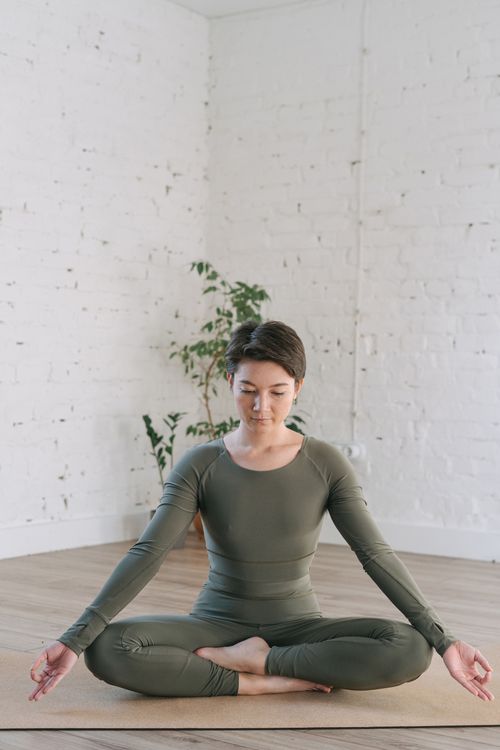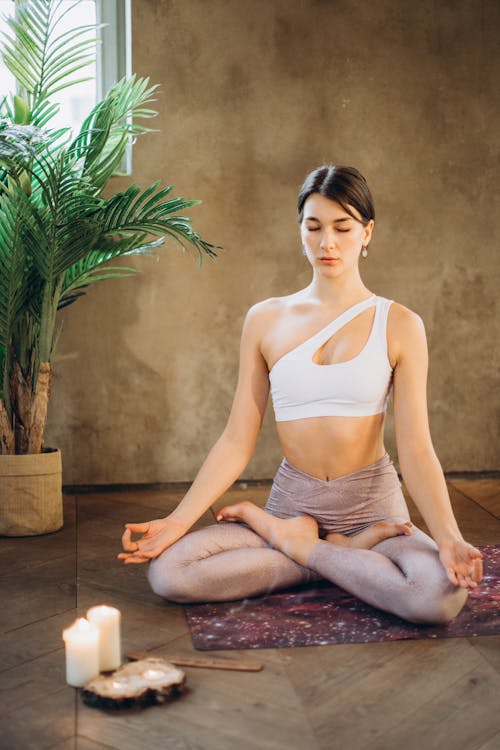
Anxiety lives in the body as much as it lives in the mind. The racing heart, tight chest, shallow breathing, clenched jaw, tense shoulders, and knotted stomach that accompany anxiety aren't just side effects of worried thoughts — they're the primary language through which your nervous system communicates threat. This is precisely why yoga, which works directly with the body's physiological systems, is one of the most effective non-pharmaceutical approaches to managing anxiety.
The evidence base is substantial. A meta-analysis of 42 clinical trials published in the British Journal of Sports Medicine concluded that yoga significantly reduced anxiety symptoms, with effect sizes comparable to cognitive behavioral therapy. The National Institute of Mental Health recognizes mind-body practices including yoga as complementary approaches for anxiety management. And unlike anti-anxiety medication, yoga has no withdrawal effects, no dependency risk, and produces positive side effects (improved flexibility, strength, and body awareness) rather than negative ones.
How Yoga Reduces Anxiety
Yoga addresses anxiety through multiple simultaneous pathways, which is part of why it's so effective — it doesn't target a single mechanism but addresses the condition from several angles at once.
Parasympathetic Nervous System Activation
Anxiety is fundamentally a state of sympathetic nervous system overdrive — the fight-or-flight response activated inappropriately or excessively. Yoga poses, breathwork, and meditation activate the parasympathetic nervous system (the calm-and-connect response), which directly counterbalances sympathetic activation.
Specific mechanisms include stimulation of the vagus nerve through breathwork and certain poses, reduction of cortisol (the primary stress hormone), increase in GABA (the brain's calming neurotransmitter), and downregulation of the HPA axis (the stress response system).
A study from Boston University found that yoga practitioners had significantly higher GABA levels after practice compared to a matched walking group — and GABA is the very neurotransmitter that benzodiazepine anti-anxiety medications work by enhancing. Yoga essentially produces a natural version of the neurochemical effect that pharmaceuticals target.
Interoceptive Exposure
Anxiety often involves fear of physical sensations — rapid heartbeat, shortness of breath, dizziness, and muscle tension become threatening signals that trigger further anxiety in a vicious cycle. Yoga provides controlled exposure to similar sensations (elevated heart rate in challenging poses, altered breathing patterns in breathwork, dizziness in inversions) in a safe context, gradually teaching the nervous system that these sensations are tolerable and non-threatening.
This mechanism mirrors the exposure therapy component of cognitive behavioral treatment for anxiety, making yoga a form of embodied exposure practice.
Present-Moment Anchoring
Anxiety is future-oriented — it involves catastrophic predictions about what might happen, what could go wrong, and what dangers lurk ahead. Yoga anchors awareness in the present moment through attention to breath, physical sensation, and movement. You can't simultaneously be fully absorbed in the sensation of your feet on the mat and worrying about next week's meeting. The present-moment focus provides temporary relief from worry cycles and, with repeated practice, trains the brain's capacity for present-moment awareness.
Breathwork Techniques for Anxiety
Breathing practices are the fastest-acting anti-anxiety tools in the yoga toolbox. Because breathing is both automatic and voluntarily controllable, it provides a direct pathway to the autonomic nervous system.
Extended Exhale Breathing
The single most effective anxiety-reducing breath pattern: inhale for 4 counts, exhale for 6-8 counts. The extended exhale activates the vagus nerve, slowing heart rate and signaling safety to the brain. Practice for 3-5 minutes for noticeable anxiety reduction.
Why it works: during inhalation, heart rate naturally accelerates (sympathetic activation). During exhalation, heart rate decelerates (parasympathetic activation). By extending the exhale relative to the inhale, you tip the autonomic balance toward parasympathetic dominance.
Alternate Nostril Breathing (Nadi Shodhana)
Close the right nostril with the right thumb and inhale through the left nostril for 4 counts. Close both nostrils briefly. Release the right nostril, close the left with the right ring finger, and exhale through the right for 4 counts. Inhale through the right for 4 counts. Close both. Exhale through the left for 4 counts. This completes one cycle. Practice 5-10 cycles.
Research published in the International Journal of Yoga found that alternate nostril breathing significantly reduced anxiety and improved cardiovascular function in medical students under exam stress. The mechanism involves balancing sympathetic and parasympathetic input through alternating nasal dominance, plus the focused attention required disrupts anxious thought patterns.
Box Breathing
Inhale for 4 counts, hold for 4 counts, exhale for 4 counts, hold for 4 counts. Repeat for 3-5 minutes. This technique is used by Navy SEALs for stress management in high-pressure situations, demonstrating its effectiveness even under extreme conditions.
The breath holds activate the parasympathetic nervous system through the dive reflex and baroreceptor stimulation, while the structured counting engages the prefrontal cortex, drawing cognitive resources away from anxious rumination.
Physiological Sigh
Stanford neuroscientist Andrew Huberman's research has identified the physiological sigh — a double inhale through the nose followed by an extended exhale through the mouth — as one of the fastest ways to reduce acute anxiety. A single cycle can produce noticeable calming within 30 seconds, making it ideal for anxiety spikes and panic onset.
Calming Yoga Poses
The following poses are specifically selected for their anxiety-reducing properties based on their effects on the nervous system, breath capacity, and muscular tension patterns.
Child's Pose (Balasana)
Kneel with toes together and knees wide. Fold forward, extending arms ahead or alongside the body. Rest forehead on the mat. Breathe deeply into the back body.
Why it calms anxiety: the forward fold activates the parasympathetic nervous system through gentle abdominal compression. The enclosed posture provides a sense of protection. The forehead contact with the mat stimulates the vagus nerve branch that runs across the forehead. Hold for 2-5 minutes.
Legs Up the Wall (Viparita Karani)
Lie on your back with legs resting vertically against a wall. Arms rest alongside the body or on the belly.
Why it calms anxiety: this gentle inversion activates the baroreceptor reflex, reducing heart rate and blood pressure. The passive, supported position eliminates muscular effort, allowing the nervous system to fully downregulate. The inverted leg position promotes venous return and reduces sympathetic activation. Hold for 5-15 minutes.
Reclined Bound Angle (Supta Baddha Konasana)
Lie on your back. Bring soles of feet together and let knees fall open. Support the knees with blankets or blocks if needed. Place one hand on the heart and one on the belly.
Why it calms anxiety: the open body position counteracts the protective posturing (rounded shoulders, crossed arms, curled posture) that anxiety creates. The hip opening releases psoas tension — the psoas muscle is directly connected to the diaphragm and chronically tight in anxious individuals, restricting breath capacity. The hands-on-body contact provides self-soothing through gentle pressure. Hold for 3-10 minutes.
Supported Bridge
Lie on your back with knees bent. Lift hips and place a yoga block under the sacrum at its lowest height. Let your weight rest on the block.
Why it calms anxiety: the gentle inversion and chest opening expand breath capacity while the supported position allows complete muscular release. The block position provides subtle traction on the lower spine, releasing lumbar tension that accumulates during anxious guarding.
Forward Fold (Uttanasana)
Stand with feet hip-width apart. Fold forward from the hips, bending knees generously. Let arms dangle or hold opposite elbows. Let head hang heavy.
Why it calms anxiety: standing forward folds produce immediate parasympathetic activation. Blood flow to the brain increases, the spine decompresses, and the hanging head position releases neck and shoulder tension. Bending the knees protects the lower back and makes the pose accessible regardless of hamstring flexibility. Hold for 1-3 minutes.
A 20-Minute Anti-Anxiety Sequence
This sequence is designed to be practiced when anxiety is elevated, as a daily maintenance practice, or before anxiety-provoking situations.
Minutes 1-3: Centering. Sit comfortably. Practice extended exhale breathing (4 counts in, 6-8 counts out) for 3 minutes.
Minutes 3-5: Cat-cow. Move slowly between cat and cow poses, synchronizing breath with movement. The rhythmic spinal undulation is inherently calming and warms the body for subsequent poses.
Minutes 5-8: Child's pose. Settle into child's pose with arms extended. Focus on breathing into the back body, expanding the ribcage with each inhale. Hold for 3 minutes.
Minutes 8-11: Reclined bound angle. Transition to lying on your back in reclined bound angle. Place a bolster or pillows under the knees for support. Rest here for 3 minutes with natural breathing.
Minutes 11-14: Gentle supine twist. Bring knees to chest, then let them fall to one side. Hold 90 seconds, then switch. Twists release deep torso tension and stimulate the vagus nerve through gentle abdominal compression.
Minutes 14-17: Legs up the wall. Move to a wall and rest with legs elevated for 3 minutes. This is the most parasympathetically activating single pose available.
Minutes 17-20: Savasana with body scan. Lie on your back in savasana. Scan through each body region, noticing and releasing tension. Allow the accumulated effects of the sequence to settle into your nervous system.
Building an Anxiety-Specific Practice
For anxiety management, consistency matters more than intensity. A daily 15-20 minute practice produces greater cumulative anxiety reduction than occasional longer sessions. The nervous system learns through repetition, and daily practice trains the parasympathetic response to activate more readily even outside of yoga.
Practice during relatively calm periods, not only during anxiety peaks. Training your nervous system during low-anxiety states builds the regulatory capacity that becomes available during high-anxiety moments. Think of it as building a reserve of calm that you can draw on when needed.
Combine yoga with other evidence-based anxiety management strategies. Cognitive behavioral therapy, regular cardiovascular exercise, adequate sleep, social connection, and reduced caffeine consumption all complement yoga's anxiety-reducing effects. Together, these approaches create a comprehensive anxiety management system that addresses the condition from multiple angles.
Track your anxiety levels over time — before and after practice, and week to week. This creates accountability, demonstrates progress (which counteracts anxiety's narrative that nothing helps), and helps you identify which specific practices produce the greatest benefit for your individual anxiety pattern.
The journey from anxiety-dominated to anxiety-managed isn't linear, and yoga won't eliminate anxiety entirely — nor should it, since some anxiety is adaptive and protective. What yoga offers is a reliable set of tools for shifting your nervous system from alarm to calm, for building the physiological resilience that prevents anxiety from escalating, and for developing a relationship with your body that feels safe rather than threatening. These are fundamental shifts that no pill can replicate, and they strengthen with every practice.
Sources and Further Reading
Health and Beyond uses reputable medical and scientific sources where possible. These links support or expand on the topics discussed above.
- National Institute of Mental Healthnimh.nih.gov
- Cognitive behavioral therapyapa.org