Meditation has moved from the fringes of Eastern spirituality to the mainstream of health recommendations. Your doctor may have suggested it. Your favorite athlete probably practices it. Business leaders credit it with sharpening their decision making. Research supports nearly every claim made about its benefits, from reduced anxiety to better sleep to measurable changes in brain structure.
Yet most people who try meditation quit within weeks. The gap between hearing about the benefits and actually building a sustainable practice is where most intentions die. Not because meditation is hard in some mystical sense, but because the instructions most beginners receive are incomplete, unrealistic, or just wrong.
This guide offers what a friend with experience would tell you over coffee. What the practice actually involves. What you should expect in the first weeks. How to handle the obstacles that stop most people. And how to know whether it is working.
What Meditation Actually Is
Popular culture describes meditation as clearing your mind, achieving bliss, or escaping into some calm place. None of these descriptions are accurate, and all of them set beginners up to feel like failures.
Meditation, at its simplest, is the practice of paying attention on purpose. You pick something to focus on, usually your breath. Your mind wanders away from it, which it will do constantly. You notice the wandering and gently return your attention to the focus. That is the entire practice.
The quiet mind people imagine is not the goal. Noticing that your mind has wandered and returning to the focus is the goal. Every time this happens, you have done the practice. The wandering itself is not failure. It is the raw material.
This reframe matters enormously because it prevents the universal beginner frustration of feeling like a bad meditator. If you sat for 20 minutes and got distracted 100 times, you just did 100 repetitions of the skill. That is a productive session.
The Science of What Meditation Does to You
Research on meditation has accelerated in the past two decades, and the findings are consistent across hundreds of studies.
Regular practice reduces activity in the amygdala, the brain region responsible for threat detection and the stress response. This shows up as lower cortisol levels, reduced anxiety, and a calmer response to daily stressors.
Brain imaging studies show structural changes in long term meditators. The prefrontal cortex, associated with executive function and self regulation, shows increased volume. The amygdala, associated with fear and reactivity, shows decreased reactivity. These changes can begin to appear within eight weeks of daily practice.
Meditation reduces symptoms of anxiety and depression. A large 2014 meta analysis published in JAMA Internal Medicine found that mindfulness programs produced moderate effects comparable to antidepressants for some conditions.
Sleep quality improves. Studies on insomniacs have shown meditation to rival standard sleep interventions. The nervous system effects that calm racing thoughts during the day carry into nighttime.
Pain tolerance increases. Not because pain sensation decreases but because the relationship to pain changes. Long term meditators show distinct brain patterns when processing painful stimuli.
Attention and working memory improve. Eight week programs have demonstrated measurable cognitive benefits in memory, focus, and the ability to resist distraction.
Physical health markers also shift. Blood pressure decreases, heart rate variability improves, inflammation markers decline with consistent practice.
How to Sit and What to Do
You do not need special equipment, a Tibetan cushion, or a quiet retreat. You need a place to sit and a few minutes.
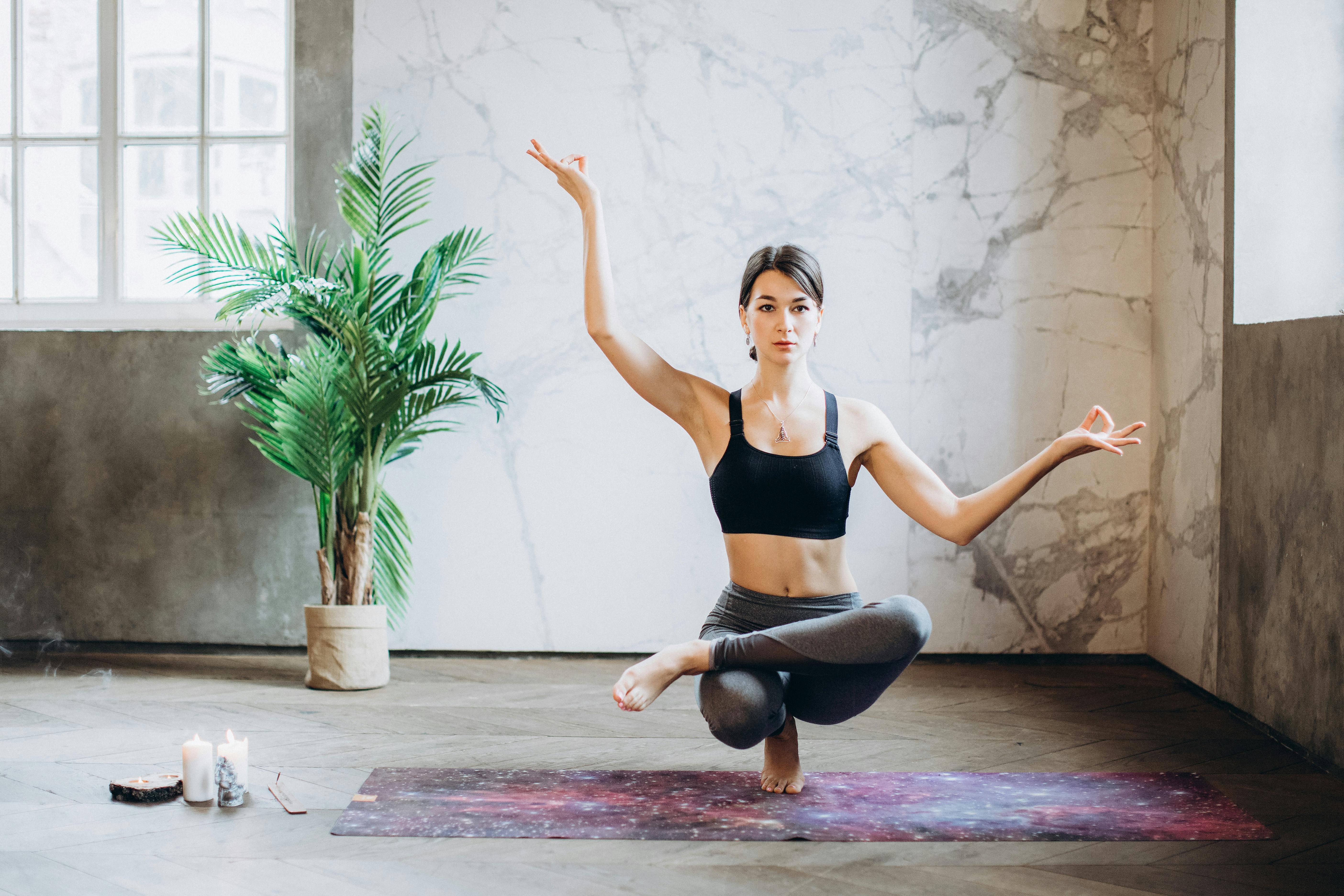
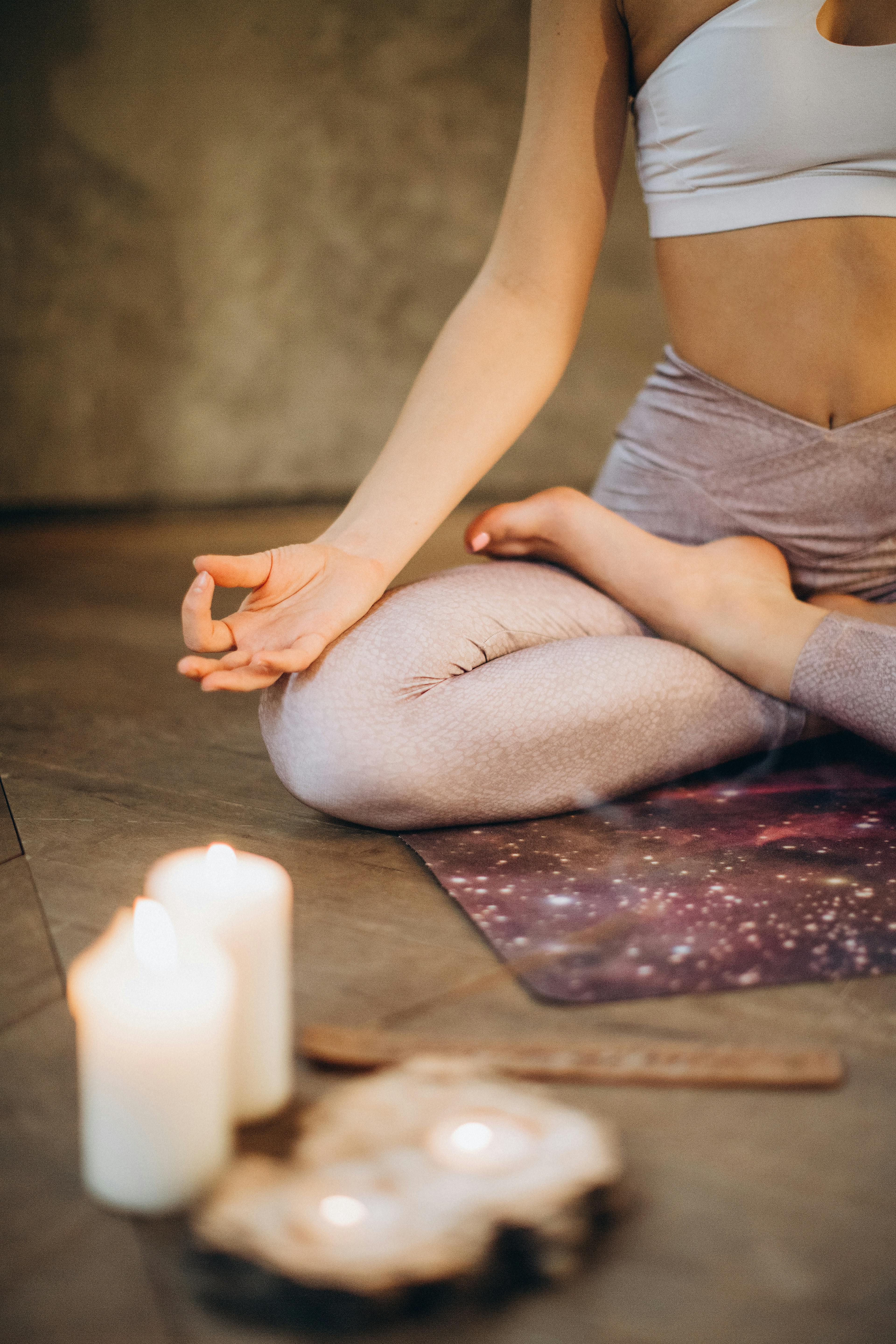
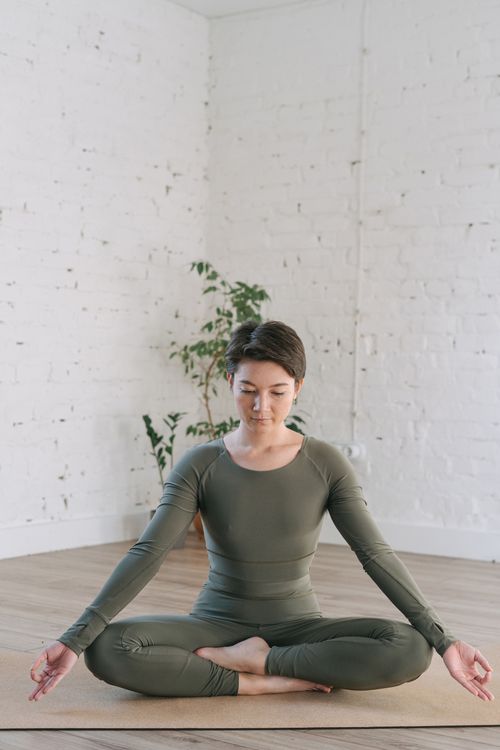
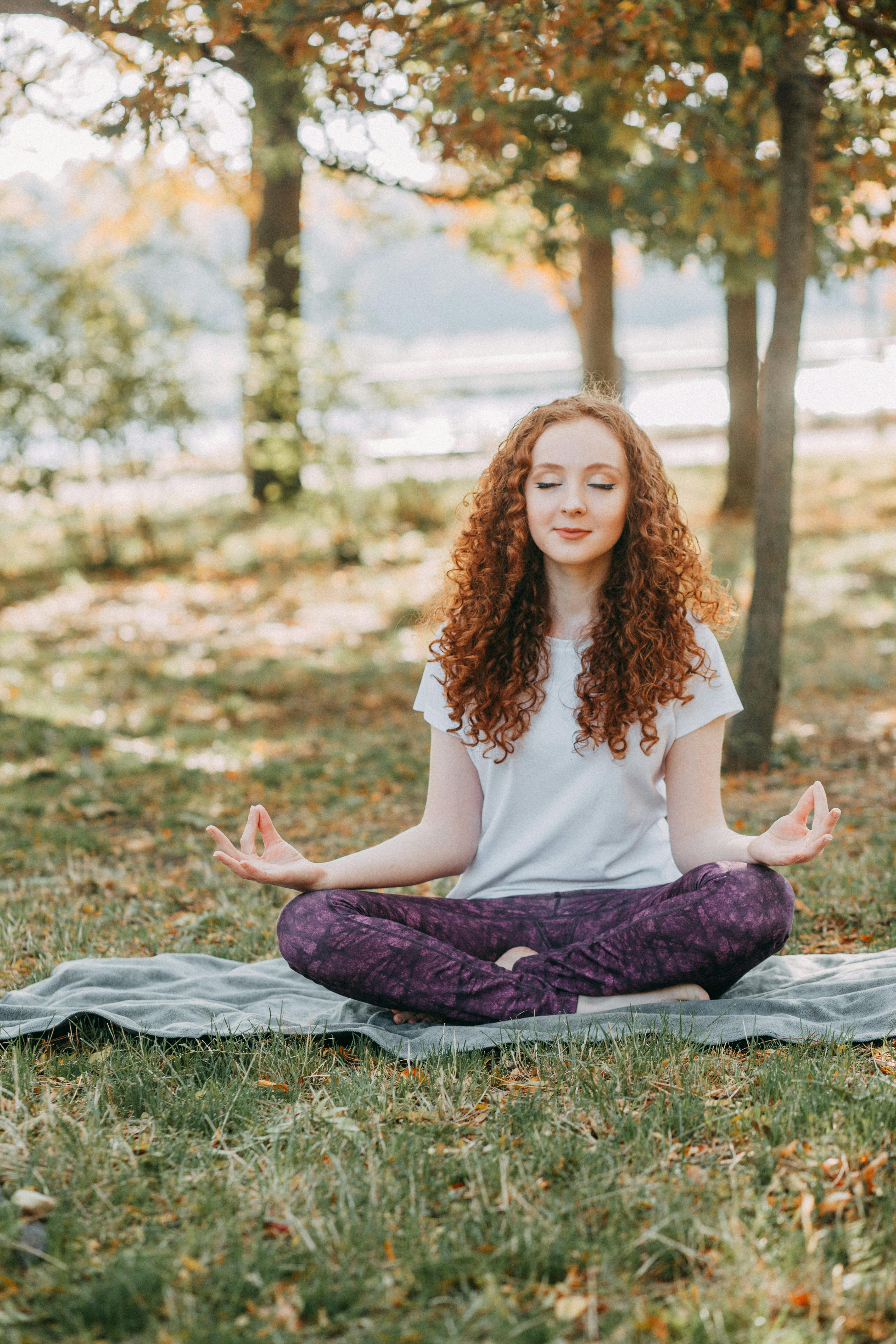
Sit in a position you can maintain comfortably for the duration of your practice. This can be cross legged on a cushion, sitting on a chair with feet flat on the floor, or even lying down if sitting causes pain. Lying down risks falling asleep, especially for tired beginners, but it beats not practicing at all.
Keep the spine upright and relaxed. Imagine a string lifting the crown of your head gently toward the ceiling. Your shoulders should be relaxed down, your chin level, your face soft.
Your eyes can be closed or slightly open with a soft gaze at the floor a few feet in front of you. Both work. Closed eyes feel more natural for most beginners. Slightly open eyes prevent drowsiness and reduce dream like mental imagery.
Rest your hands on your thighs or in your lap. Any position works as long as it does not create tension.
Begin by taking three deeper breaths to settle. Then let the breath return to its natural rhythm.
Now start paying attention to your breath. Not controlling it. Just noticing it. Feel the air moving through your nose, the slight expansion of your chest and belly, the pause between inhalation and exhalation.
When your mind wanders, which it will within seconds for most beginners, notice that it has wandered. Then return attention to the breath without judgment. Repeat this cycle for the duration of your session.
That is the practice.
How Long and How Often
The ideal length for beginners is shorter than most people assume. Five to ten minutes daily beats 30 minutes twice a week. Consistency matters more than duration in the early stages.
Start with five minutes daily for the first two weeks. Increase to ten minutes for weeks three through six. Move to fifteen or twenty minutes after two months if you want more practice time.
Practice at the same time daily to build the habit. Morning meditation works well for most people because the mind is quieter and the day has not yet crowded in with distractions. Evening meditation helps with sleep and stress release. Both work.
Link the practice to an existing habit to improve consistency. After morning coffee but before checking the phone. After brushing teeth but before getting into bed. These anchors help the practice survive busy days.
Missing a day is not a catastrophe. Missing a week is not a catastrophe. What matters is returning to the cushion without dramatic self criticism. The practice is robust to imperfection.
Different Meditation Techniques for Beginners
Breath focused meditation as described above is the most common starting point. Nearly every tradition uses some version of it because it works.
Body scan meditation involves systematically bringing attention to different parts of the body, starting at the head or feet and moving through. Each area gets noticed for a few breaths before attention moves on. This practice is particularly useful for people who hold a lot of physical tension or feel disconnected from their bodies.
Loving kindness meditation uses internal phrases to cultivate warmth toward self and others. You might silently repeat phrases like may I be happy, may I be healthy, may I be at peace. You then direct these wishes toward loved ones, neutral people, difficult people, and eventually all beings. Research shows loving kindness meditation uniquely affects emotional warmth and social connection.
Noting meditation involves mentally labeling whatever arises in awareness. A thought arises, you note thinking. A sound arises, you note hearing. A feeling arises, you note feeling. This technique prevents the mind from getting pulled into any particular content and develops clarity about the process of experience itself.
Mantra meditation uses a word or phrase repeated mentally. Transcendental meditation uses personal mantras given by teachers. Simpler forms use single words like peace or simply the word one. The repetition occupies the verbal mind while attention settles.
Walking meditation involves slow intentional walking with attention on the physical sensations of each step. This works well for people who struggle to sit still and can be practiced almost anywhere.
Experiment with different techniques to find what resonates. Most long term practitioners develop a primary practice but use different techniques for different situations.
The Obstacles That Stop Most Beginners
Boredom arises quickly for beginners. Sitting quietly while nothing exciting happens feels tedious to a mind trained on constant stimulation. The solution is not to make meditation more interesting. The solution is to recognize boredom as a sensation to be observed like any other, and to understand that tolerance for boredom is itself a valuable skill.
Restlessness and physical discomfort bring many people to quit. The mind fixates on an itch, an ache, or the urge to move. Noticing these sensations without immediately acting on them develops powerful self regulation. If the discomfort is substantial, shift positions slowly with awareness rather than jumping up.
Sleepiness, particularly for people who are chronically under rested, derails many sessions. Sitting upright rather than leaning back, practicing with eyes slightly open, and meditating before rather than after meals all help. Sometimes the body simply needs sleep more than meditation, which is a useful signal.
Frustration at not doing it right misses what the practice actually is. There is no perfect meditation. There are only more and less patient meditators. The frustration itself is another object for observation.
Strong emotions arise in meditation, sometimes unexpectedly. Grief, anger, fear, and sadness can surface when you slow down enough to notice them. This is the practice working, not failing. Emotions need to move through the body. Meditation gives them space to do so. If emotions become overwhelming, it is fine to pause and return to practice later.
Doubt about whether it is working becomes strongest around the three to six week mark. Nothing obvious has changed. Maybe it is not for you. This is the point at which most people quit. Push through this period. The benefits are accumulating even when you cannot feel them yet.
Signs the Practice Is Working
Changes from meditation tend to be subtle and gradual. You are unlikely to have dramatic epiphanies. What happens instead is a quiet shift in how you relate to your own experience.
You notice being stressed sooner and can do something about it before it spirals. This early warning system is often the first benefit beginners recognize.
Small irritations that once ruined your mood lose their grip. Traffic, minor criticisms, and unexpected delays bother you less. The nervous system has simply become less reactive.
You sleep better. Falling asleep happens faster. Middle of the night wakings decrease. Mornings feel less brutal.
Relationships improve subtly. You listen more fully. You react less impulsively. People around you often notice the change before you do.
Attention lasts longer. Reading, conversations, and focused work become easier. The constant pull toward phone and notifications weakens.
You feel more like yourself. The meditation does not make you different so much as it clears away some of the noise that obscures who you already are.
Common Myths That Mislead Beginners
Myth one claims you need to clear your mind. You do not. You cannot. The mind generates thoughts. The skill is not in stopping thoughts but in noticing them and returning to your focus.
Myth two claims meditation is religious. While many religious traditions include meditation, the practice itself is a mental exercise that works regardless of beliefs. Secular mindfulness programs teach the same core skill without any spiritual framing.
Myth three claims you need to sit in lotus position. You do not. Any comfortable upright position works. Lotus offers no magical advantage over a simple chair.
Myth four claims meditation requires hours of daily practice. It does not. Ten minutes daily produces measurable benefits. More is often better but not required.
Myth five claims you either have the right temperament for meditation or you do not. Research does not support this. The busiest and most restless minds often benefit the most from meditation because they have the most to work with.
Building a Sustainable Long Term Practice
The people who maintain meditation for years share common habits. They practice at the same time daily. They treat the practice as non negotiable most days. They allow for imperfection without catastrophizing missed sessions. They notice the benefits when they appear but do not cling to specific outcomes.
Find a community if possible. Local groups, online sanghas, or simply meditation apps with community features provide accountability and the reminder that you are not alone in the practice.
Read occasionally about meditation. Books by teachers like Jon Kabat Zinn, Pema Chodron, Jack Kornfield, and Sharon Salzberg deepen understanding and provide motivation during lower periods.
Consider occasional retreats or longer sessions once the daily practice is established. A single silent retreat can accelerate years of daily practice. Online retreats have made these more accessible than ever.
Let the practice evolve. What meditation means to you at year three will differ from what it meant at month three. The simple breath practice at the beginning can grow into a much richer engagement with your own mind and life.
The cost of starting is small. Ten minutes a day. A quiet corner. Willingness to not be perfect at something. The return, built up over months and years of consistent practice, is difficult to overstate. You become less reactive, more present, more capable of handling what life brings. That is what the ancient traditions have been pointing at for thousands of years, and what modern science has finally begun to measure.