More people are talking about sunscreen than ever before, and somehow more people are getting it wrong. Social media is full of conflicting claims. Chemical filters are either dangerous endocrine disruptors or perfectly safe. Mineral sunscreens either feel like white paste or are the only acceptable choice. SPF 100 is either necessary or marketing fluff. The truth is more useful and less dramatic than any of the viral posts suggest.
This guide walks through how sunscreen actually works, the real differences between chemical and mineral filters, what the numbers on the bottle mean, how much to apply, and how to use it correctly every day.
Why Sunscreen Matters
Ultraviolet radiation from the sun causes sunburn, premature skin ageing, and skin cancer, including the melanoma that kills tens of thousands of people worldwide each year. Roughly 90 percent of visible skin ageing, the wrinkles, pigmentation, rough texture, and loss of elasticity that make a face look older, is driven by UV exposure.
Decades of evidence show that daily broad-spectrum sunscreen use reduces skin cancer incidence, slows photoageing, and prevents the worsening of conditions like melasma, rosacea, and post-inflammatory pigmentation. No other over-the-counter product has as much data supporting it.
The short version: sunscreen is the single highest-return item in any skincare routine.
How the Two Types Work
Sunscreens fall into two broad categories based on their active ingredients. The chemistry is genuinely different, even though the end goal is the same.
Chemical Filters
Chemical sunscreens contain organic compounds such as avobenzone, oxybenzone, octinoxate, octocrylene, homosalate, and newer global filters like bemotrizinol, bisoctrizole, and Mexoryl. They sit in the upper layers of skin and absorb UV photons, converting that energy into small amounts of heat.
Pros: lightweight feel, excellent cosmetic elegance, easy to blend on all skin tones, and the newer global filters provide superb UVA coverage. Many are available in fluids, sprays, and stick forms.
Cons: some older filters such as oxybenzone and octinoxate have raised concern over potential hormonal activity at very high repeated exposures, and over environmental damage to coral reefs. Regulatory bodies including the FDA are still evaluating the safety of several filters. Some people develop contact allergies. Chemical filters can also destabilise faster in the bottle, which is why expiration dates matter.
Mineral Filters
Mineral or physical sunscreens use zinc oxide and titanium dioxide. These are solid inorganic particles that primarily reflect and scatter UV light, with a meaningful absorbing component as well.
Pros: generally considered the safest ingredients in terms of systemic absorption, less likely to sting sensitive or reactive skin, effective from the moment of application, and very stable in the bottle.
Cons: can leave a white cast, especially on medium to deep skin tones, although tinted mineral formulas and nano-sized particle formulations have improved this substantially. Often thicker in texture. Sprays of nano-zinc or titanium should be avoided because of inhalation concerns.
Which Is Better?
The honest answer is that the best sunscreen is the one you will actually wear every day. If a product stings your eyes, breaks you out, leaves you looking ashy, or sits in a drawer because you hate the feel of it, the SPF on the label is meaningless. Cosmetic elegance matters.
For most people, modern chemical or hybrid formulations using newer filters are fine and feel good. For very sensitive skin, rosacea, melasma, pregnancy, young children, and post-procedure skin, mineral is the more conservative pick. Many excellent modern sunscreens blend both categories.
Understanding the Numbers
The front of a sunscreen bottle carries two main pieces of information: SPF and broad-spectrum status. Both matter.
SPF Is About UVB
SPF, sun protection factor, measures how well a sunscreen prevents sunburn, which is driven mainly by UVB rays. The math is not linear. SPF 15 blocks about 93 percent of UVB. SPF 30 blocks about 97 percent. SPF 50 blocks about 98 percent. SPF 100 blocks about 99 percent.
The difference between 30 and 50 looks tiny on paper but doubles or triples the protection from the one to three percent of UVB that is still getting through. For face and daily use, SPF 30 is the practical minimum and SPF 50 is a reasonable everyday target. SPF 100 is not a gimmick for people with very fair skin or high exposure, but it is also not a license to apply less often.
Broad Spectrum Is About UVA
UVA is a separate part of the solar spectrum. It penetrates deeper, is present year-round even on cloudy days, and passes through window glass. It drives photoageing, pigmentation, and a significant share of skin cancer risk.
In the United States, any product labelled "broad spectrum" has passed a critical wavelength test ensuring reasonable UVA protection. In Europe, Australia, and much of Asia, the PA system, ranging from PA+ to PA++++, or the UVA logo inside a circle, communicates UVA strength more precisely. PA++++ is the highest rating.
Look for broad spectrum on US products. Look for PA+++ or PA++++ on products from other markets.
Water Resistance
Water-resistant sunscreens have been tested to maintain their SPF for either 40 or 80 minutes of immersion or heavy sweating. No sunscreen is waterproof, a term banned from modern labelling. Reapplication after swimming, sweating, or towelling off is essential.
How Much to Apply
This is where most people lose the game. Studies repeatedly show that real-world users apply between a quarter and a half of the amount used in SPF testing. Half-dose sunscreen gives you roughly the square root of the labelled SPF. An SPF 50 applied at half the rate behaves more like SPF 7.
Use enough. The two benchmarks are easy to remember.
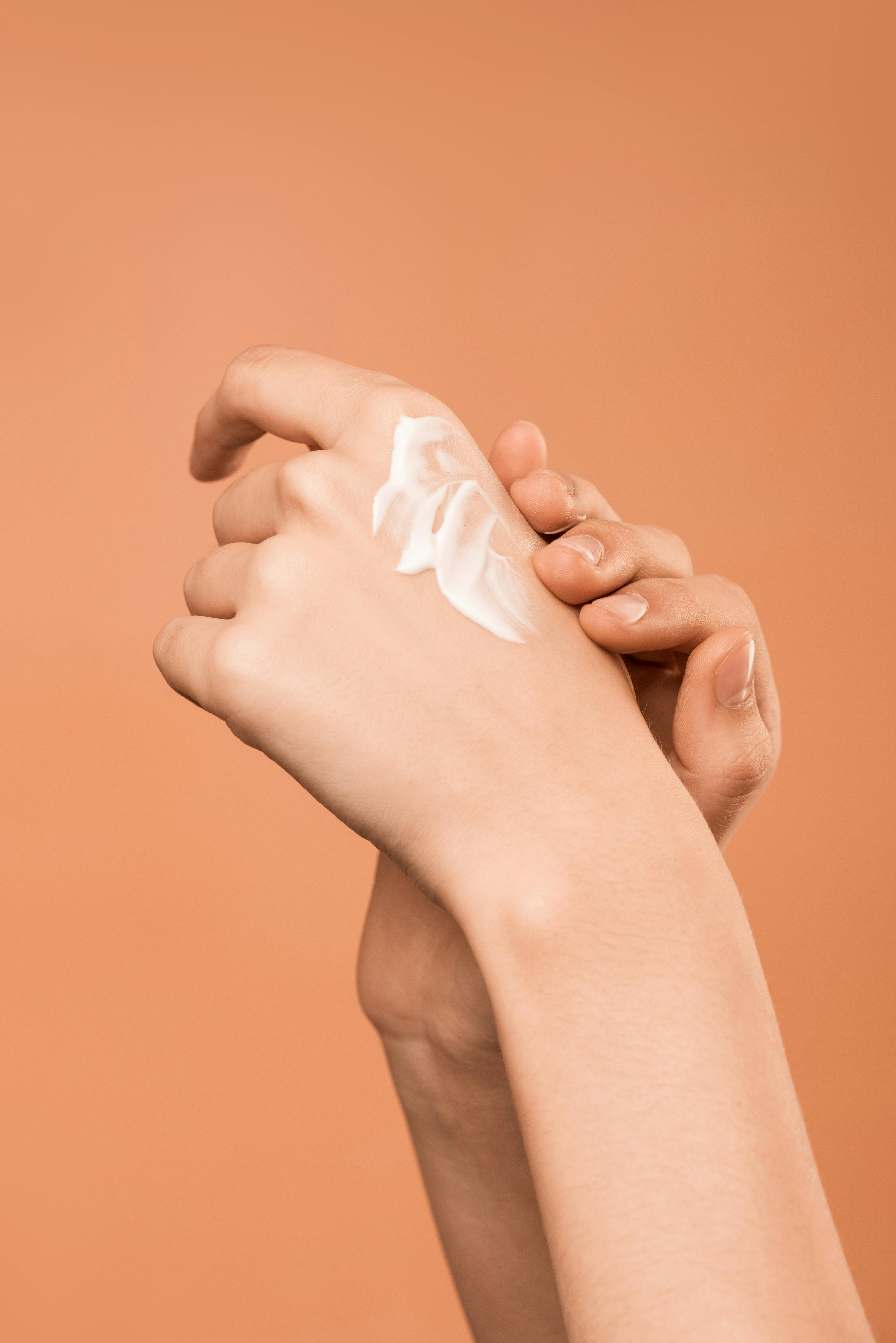
- Face and neck: two finger-lengths of sunscreen squeezed from the bottle onto the index and middle fingers. That is roughly a quarter to a third of a teaspoon.
- Full body: about one ounce, roughly the size of a shot glass or a large tablespoon.
How Often to Reapply
Every two hours of continuous sun exposure is the rule most dermatologists give. Every two hours during beach days, pool days, hiking, and outdoor sports is non-negotiable. Towelling off, swimming, and heavy sweating reset the clock immediately.
For indoor office workers whose sun exposure is limited to the commute and a lunch-time walk, a single morning application at the right dose typically covers the low-exposure day. If you are sitting by a large window in bright direct sun, a midday touch-up is still wise.
Powder sunscreens and sunscreen sticks are practical for midday touch-ups over makeup. They work when applied in a proper dose, which most people underuse. Press and layer until the colour on your skin noticeably changes.
Sunscreen for Specific Situations
Everyday Office Wear
SPF 30 to 50, broad spectrum, in a texture you like. Apply in the morning as the final step before makeup. One application is usually enough unless you have a long lunch-time walk.
Beach, Pool, and Outdoor Sports
SPF 50 or higher, water resistant for 80 minutes, applied generously and reapplied every two hours without fail. Combine with a wide-brimmed hat, UPF clothing, and sunglasses. Sunscreen alone is not enough for intense, prolonged exposure.
Children
For infants under six months, shade and protective clothing are preferred over sunscreen. For older babies and children, mineral sunscreens labelled for paediatric use, applied in full amounts and reapplied every two hours during outdoor time, are the standard. Hats, UPF swim shirts, and umbrella shade should be part of every outing.
Darker Skin Tones
The myth that darker skin does not need sunscreen is wrong. While melanin provides some built-in protection, skin cancer still occurs in all skin tones, and non-cancer issues such as melasma, post-inflammatory hyperpigmentation, and photoageing are major concerns. Many modern chemical and tinted mineral sunscreens blend invisibly on deeper skin, and they are widely available. Look for tinted iron-oxide-containing formulas, which also block visible light and are especially helpful for pigmentation disorders.
Pregnancy
Mineral sunscreens using zinc oxide and titanium dioxide are the most conservative choice during pregnancy because their absorption is minimal. Some dermatologists are also comfortable with certain chemical filters, but if in doubt, go mineral.
Post-Procedure and Sensitive Skin
After laser, chemical peels, microneedling, or any procedure that has compromised the skin barrier, mineral sunscreen with zinc oxide and minimal extra ingredients is the safest pick until the skin fully heals.
Common Myths, Quickly Cleared Up
Myth: dark skin does not need sunscreen. False. Lower baseline cancer rate does not mean zero, and pigmentation and photoageing concerns remain.
Myth: cloudy days do not require sunscreen. False. Up to 80 percent of UV still reaches the skin through clouds.
Myth: sunscreen blocks vitamin D synthesis entirely. Partly true, but real-world sunscreen use does not usually cause clinical deficiency, and oral vitamin D is a safer way to fix low levels than deliberate unprotected sun exposure.
Myth: higher SPF means you can skip reapplication. False. No SPF survives towel-drying, sweating, and hours of sun without reapplication.
Myth: sunscreen causes cancer. False. Current scientific evidence does not support this claim for any approved sunscreen filter.
Myth: you do not need sunscreen indoors. Partial. If you sit next to a large window in direct sun for hours, UVA still reaches you. For most offices, indirect sunscreen use is sufficient after your morning application.
Building the Habit
The best sunscreen routine is one that becomes invisible. Leave the bottle next to your toothbrush or on your desk. Apply immediately after moisturiser, every morning, without thinking about the forecast. Keep a travel-size tube in your bag for reapplication. Replace the bottle before it expires, usually within one year of opening.
A month of consistent daily sunscreen use will not produce visible results. Ten years of it will. Photograph yourself occasionally. The skin that shows up in those photos is the slow, quiet return on the habit.
The Takeaway
Sunscreen is simple in principle and easy to overthink. Pick a broad-spectrum SPF 30 or higher product that you actually enjoy using. Apply two finger-lengths to your face every morning. Use a shot-glass worth on the full body when outdoors. Reapply every two hours in sun, sooner after water or sweat. Support it with hats, shade, and UPF clothing on heavy-exposure days.
The argument between chemical and mineral is real, but it is second-order. The first-order question is whether you wear sunscreen every day in the right amount. Answer yes, and your skin will thank you for the rest of your life.
---
This article is educational. Patients with specific skin conditions or concerns should consult a board-certified dermatologist for personalised guidance.
Sources and Further Reading
Health and Beyond uses reputable medical and scientific sources where possible. These links support or expand on the topics discussed above.
- National Cancer Institute: Skin Cancercancer.gov
- MedlinePlus: Skin Conditionsmedlineplus.gov