After age 30, you lose approximately 3 to 5 percent of your muscle mass per decade if you do nothing to counteract it. This age-related muscle loss, called sarcopenia, accelerates after 50 and becomes a primary driver of frailty, falls, metabolic disease, and loss of independence in later years. The single most effective intervention against sarcopenia is resistance training, and research consistently shows it is never too late to start.
Studies from Harvard Medical School have demonstrated that adults in their 70s, 80s, and even 90s can build significant muscle mass and strength through progressive resistance training. The benefits extend far beyond aesthetics. Stronger muscles improve balance and reduce fall risk, increase bone density to fight osteoporosis, enhance metabolic health and insulin sensitivity, reduce joint pain by supporting joint structures, and improve the capacity to perform daily tasks that maintain independent living.
If you are over 50 and not currently strength training, starting now is one of the most consequential health decisions you can make.
Why Muscle Matters More As You Age
Muscle tissue is not just for movement and appearance. It functions as a metabolic organ that profoundly influences your overall health. Skeletal muscle is the largest site of glucose disposal in your body, meaning more muscle mass directly improves your ability to regulate blood sugar. This is why resistance training is recommended by the American Diabetes Association as a core component of diabetes prevention and management.
Muscle mass is also the primary reserve your body draws upon during illness, surgery, or injury. Hospitalized older adults with greater muscle mass have shorter recovery times, fewer complications, and lower mortality rates. Building muscle before you need it is essentially creating a health insurance policy against future medical events.
Bone density is directly influenced by the mechanical forces that muscles exert on bones. When you contract a muscle forcefully against resistance, the attached bones experience mechanical stress that stimulates bone-building cells called osteoblasts. This is why resistance training is more effective than walking or swimming for preventing and managing osteoporosis. A meta-analysis published in the journal Bone found that resistance training programs increased bone mineral density at the hip and spine in postmenopausal women, the population most vulnerable to osteoporotic fractures.
Balance and fall prevention improve with strength training because balance is fundamentally a strength problem. Your body maintains balance through rapid muscular corrections at the ankles, knees, and hips. When these muscles are weak, the corrections become inadequate, and falls occur. Strengthening the legs and core reduces fall risk by 40 percent according to a systematic review published in the British Medical Journal.
Getting Started Safely
Medical Clearance
If you have been sedentary, have known cardiovascular disease, or have orthopedic conditions, consult your physician before starting a strength training program. Most doctors strongly encourage resistance training for older adults but may want to ensure that specific conditions are managed appropriately before you begin.
That said, the list of absolute contraindications to resistance training is short. Unstable angina, uncontrolled hypertension above 180/110, and acute illness are reasons to delay starting. Most chronic conditions including controlled heart disease, diabetes, arthritis, and previous joint replacements are actually improved by appropriate resistance training.
Starting Equipment
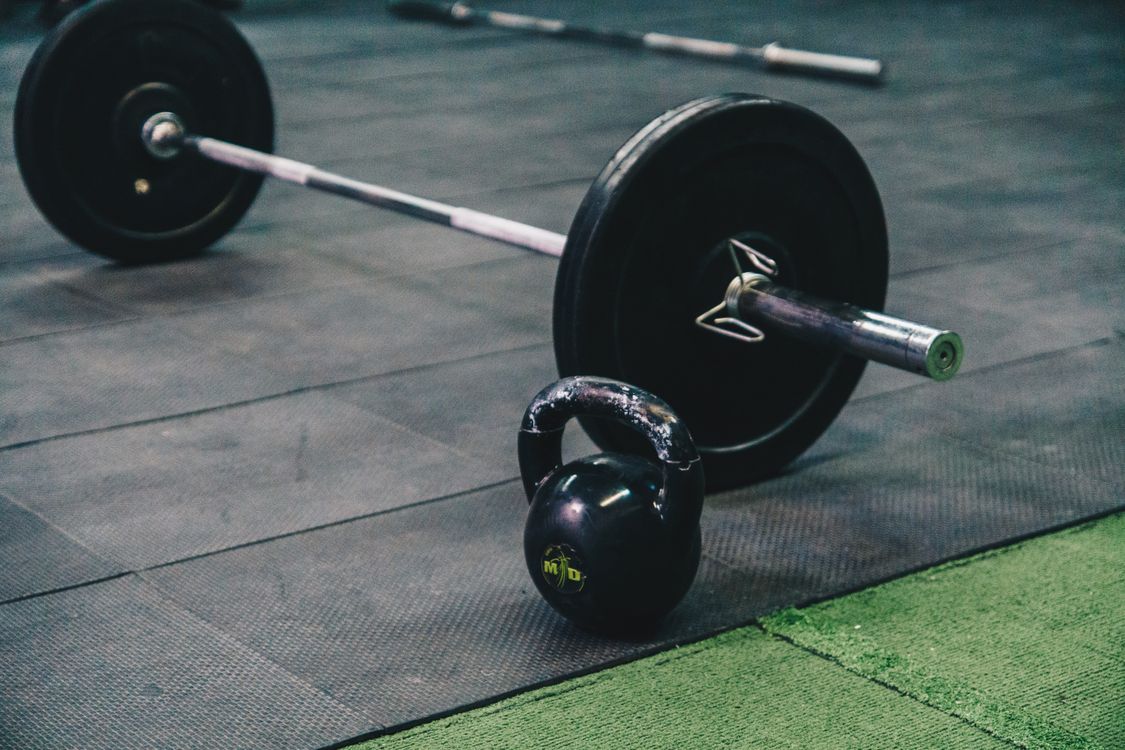
You can begin an effective strength training program with minimal equipment. A set of adjustable dumbbells or three to four pairs of fixed dumbbells in light, moderate, and moderately heavy weights covers most needs. A sturdy chair for support during certain exercises and a mat for floor work complete a functional home setup.
Gym membership provides access to machines, which offer advantages for older beginners. Machines guide your movement through a fixed path, reducing coordination demands and allowing you to focus on muscular effort. They also make it easier to adjust resistance in small increments, which is important for progressive overload.
The First Four Weeks
Your initial priority is learning movement patterns, not lifting heavy weights. Spend the first four weeks practicing proper form with light resistance, focusing on controlled movement speed and full range of motion. This period builds the neuromuscular connections necessary for safe progression.
Each exercise should be performed with a controlled tempo: two seconds to lift the weight, a one-second pause, and three seconds to lower it. This controlled lowering, called the eccentric phase, is particularly important for building strength and tendon resilience in older adults.
Muscle soreness after initial sessions is normal and expected. Delayed onset muscle soreness typically peaks 24 to 48 hours after training and resolves within three to five days. If soreness prevents you from performing daily activities or persists beyond five days, you did too much and should reduce volume in subsequent sessions.
The Foundational Exercise Program
The following program targets all major muscle groups using exercises selected for safety and effectiveness in the over-50 population. Perform this routine two to three times per week with at least one rest day between sessions.
Goblet Squat
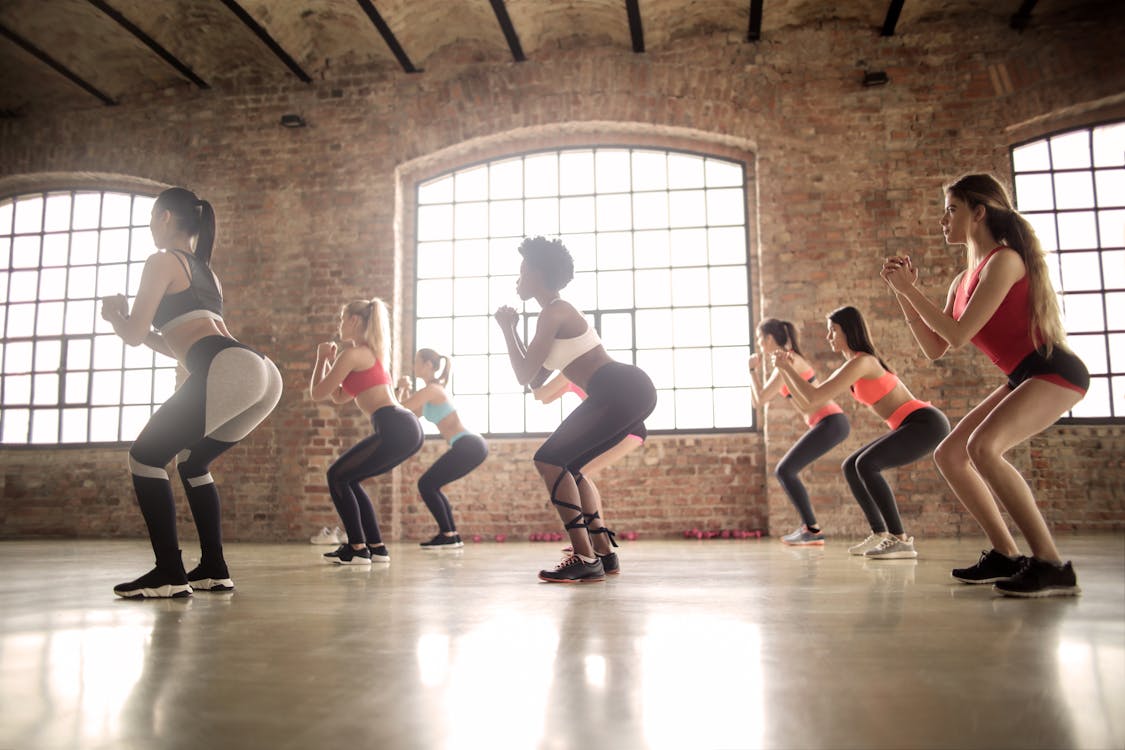
Hold a dumbbell vertically against your chest, stand with feet slightly wider than shoulder width, and squat down by pushing your hips back and bending your knees. Descend until your thighs are parallel to the floor or as low as comfortable, then press through your feet to stand. If mobility limits your depth, place a chair behind you and squat to sitting as a modified version.
This exercise targets the quadriceps, glutes, and core simultaneously while building the movement pattern you use every time you sit down and stand up. Start with bodyweight only, adding resistance as form solidifies.
Chest Press
Lie on a bench or the floor with a dumbbell in each hand at chest level. Press the dumbbells upward until your arms are extended, then lower slowly to the starting position. Floor press is preferred for beginners because the floor limits range of motion, reducing shoulder stress.
Seated Row
Using a cable machine, resistance band attached to a doorframe, or a single dumbbell in a bent-over position, pull the weight toward your lower ribcage, squeezing your shoulder blades together. This exercise strengthens the upper back muscles that maintain posture and counteract the forward rounding that accelerates with age.
Dumbbell Shoulder Press
Seated or standing, press dumbbells from shoulder height to overhead. This builds shoulder strength needed for placing items on shelves, lifting objects overhead, and maintaining the shoulder mobility that degrades without use.
Step-Ups
Using a sturdy step, bench, or stair, step up with one foot, pressing through that foot to stand on the step, then lower back down with control. This exercise directly trains the single-leg strength needed for climbing stairs and recovering from stumbles.
Start with a low step height of 6 to 8 inches and increase as strength and confidence improve. Hold dumbbells at your sides for additional resistance when bodyweight becomes easy.
Deadlift Variation
The hip hinge pattern trained by deadlifts is essential for safely picking objects up from the floor. For beginners, a Romanian deadlift with dumbbells provides the most accessible entry point. Stand holding dumbbells in front of your thighs, push your hips back while maintaining a flat back, lower the weights along your shins until you feel a stretch in your hamstrings, then drive your hips forward to return to standing.
This movement strengthens the posterior chain, which includes the glutes, hamstrings, and lower back muscles, collectively the most important muscle group for functional independence and back pain prevention.
Plank
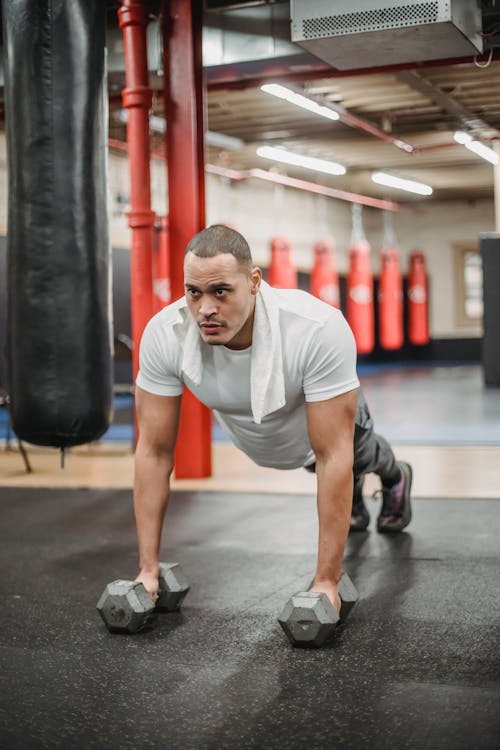
Hold a straight body position on your forearms and toes for 20 to 60 seconds. Planks build the core stability needed to protect your spine during all other activities. If a full plank is too demanding, start with knees on the ground and progress to toes as strength develops.
Farmer's Carry
Hold a heavy dumbbell or kettlebell in each hand and walk with tall posture for 30 to 60 seconds. This deceptively simple exercise builds grip strength, core stability, and the whole-body strength needed for carrying groceries, luggage, and other daily loads. According to Mayo Clinic's exercise recommendations, functional exercises like carries that mimic real-life movements provide the greatest practical benefit for older adults.
Programming for Progressive Overload
Your muscles will not continue getting stronger unless you progressively increase the demands placed on them. This principle of progressive overload is non-negotiable for ongoing results but must be applied more conservatively in adults over 50 due to longer recovery times and increased injury vulnerability.
Increase resistance by the smallest available increment when you can complete all prescribed repetitions with good form for two consecutive sessions. For most exercises, this means adding 2 to 5 pounds. Rushing weight progression is the most common cause of injury in older lifters.
Volume, meaning total sets and repetitions, should also progress gradually. Start with two sets of 10 to 12 repetitions per exercise. After four weeks of consistent training, add a third set. After eight weeks, consider adding one additional exercise per muscle group.
Rep ranges between 8 and 15 repetitions per set are ideal for older adults. This range provides sufficient mechanical tension for muscle growth while keeping weights moderate enough to protect joints. Very heavy loads with fewer than 6 repetitions increase injury risk without proportional benefit for most adults over 50.
Recovery Considerations for Older Adults
Recovery capacity decreases with age, making rest and recovery management more important than the training itself. Muscle protein synthesis rates are lower, inflammation from training resolves more slowly, and connective tissues require longer adaptation periods.
Sleep is the most critical recovery factor. Growth hormone, which drives muscle repair and growth, is released primarily during deep sleep. Seven to nine hours of quality sleep maximizes recovery between training sessions.
Protein intake must be higher in older adults to achieve the same anabolic response as younger individuals. A concept called anabolic resistance means that older muscles require more protein per meal to stimulate muscle protein synthesis effectively. Research suggests 30 to 40 grams of protein per meal, consumed three to four times daily, optimizes muscle building and recovery.
Active recovery between training sessions through walking, light swimming, or gentle stretching improves blood flow and reduces stiffness without adding training stress. Complete inactivity on rest days is counterproductive.
Hydration supports every aspect of recovery. Older adults often have blunted thirst sensation, making deliberate fluid intake more important. Aim for at least half your body weight in ounces of water daily, increasing during training days.
Managing Common Concerns
Joint pain is the most frequently cited barrier to strength training in older adults. Counterintuitively, properly performed resistance training typically reduces joint pain rather than increasing it because stronger muscles better support and stabilize joint structures.
If a specific exercise causes joint pain, modify the range of motion, reduce the weight, or substitute a different exercise that targets the same muscles without provoking the joint. Pain during or after exercise is a signal to modify, not to stop training entirely.
Arthritis responds positively to strength training in most cases. A Cochrane review of 54 studies found that resistance training reduced pain and improved physical function in people with knee and hip osteoarthritis. The key is starting light, progressing gradually, and training consistently.
Blood pressure elevation during resistance training is a concern for some, but research shows that long-term resistance training actually reduces resting blood pressure. Breathing properly, exhaling during exertion and inhaling during the lowering phase, prevents dangerous spikes during individual repetitions.
The Long-Term Perspective
Strength training is not a short-term project but a lifelong practice. The adults who maintain functional independence, physical capability, and metabolic health into their 70s, 80s, and beyond almost universally include some form of resistance training in their routines.
Start where you are, progress at whatever rate your body allows, and focus on consistency above all else. Two modest training sessions per week, maintained for years, will produce far better outcomes than an aggressive program abandoned after three months.
The best time to start strength training was twenty years ago. The second best time is today.