Walking into a gym for the first time and seeing rows of unfamiliar machines and racks of heavy weights can be intimidating. It stops a lot of people before they even start. But strength training is not reserved for bodybuilders and athletes. It is one of the single most beneficial things any human being can do for their health, regardless of age, gender, or current fitness level.
The research is unambiguous. Regular resistance training reduces your risk of heart disease, type 2 diabetes, osteoporosis, and certain cancers. It improves mental health, cognitive function, sleep quality, and metabolic rate. It preserves muscle mass as you age, which directly determines whether you can live independently in your later decades. It strengthens your bones, tendons, and ligaments, making you more resilient against injury. And yes, it improves how you look and feel in your own body.
If you have never lifted a weight in your life, this guide will take you from complete beginner to confident gym-goer. No jargon, no complicated periodization schemes, no supplement stacks. Just the fundamentals that actually matter.
Why Strength Training Matters More Than You Think
Most people associate fitness with cardio. Running, cycling, swimming, or using the elliptical machine. Cardio is valuable for cardiovascular health, but strength training provides benefits that cardio simply cannot.
The most significant is muscle preservation. After age 30, you lose approximately three to five percent of your muscle mass per decade if you are not actively training to maintain it. This process, called sarcopenia, accelerates after age 50 and is a major contributor to falls, fractures, disability, and loss of independence in older adults. The only way to prevent or reverse sarcopenia is through resistance training.
Strength training also has a unique effect on your metabolism. Muscle tissue is metabolically active, meaning it burns calories even at rest. Each pound of muscle burns roughly six to seven calories per day compared to about two calories per day for a pound of fat. While this difference may sound small, over time it adds up significantly, and more importantly, it means that building muscle makes it easier to maintain a healthy body weight.
Perhaps most overlooked is the mental health benefit. A meta-analysis published in JAMA Psychiatry found that resistance exercise training significantly reduced depressive symptoms across 33 clinical trials. The effect was consistent regardless of health status, age, or gender. The sense of accomplishment that comes from getting stronger, from lifting today what you could not lift last month, builds genuine confidence that carries over into every area of your life.
The Fundamental Movements You Need to Learn
Every effective strength training program is built around a handful of fundamental movement patterns. Learning these patterns well is far more important than learning dozens of isolated exercises.
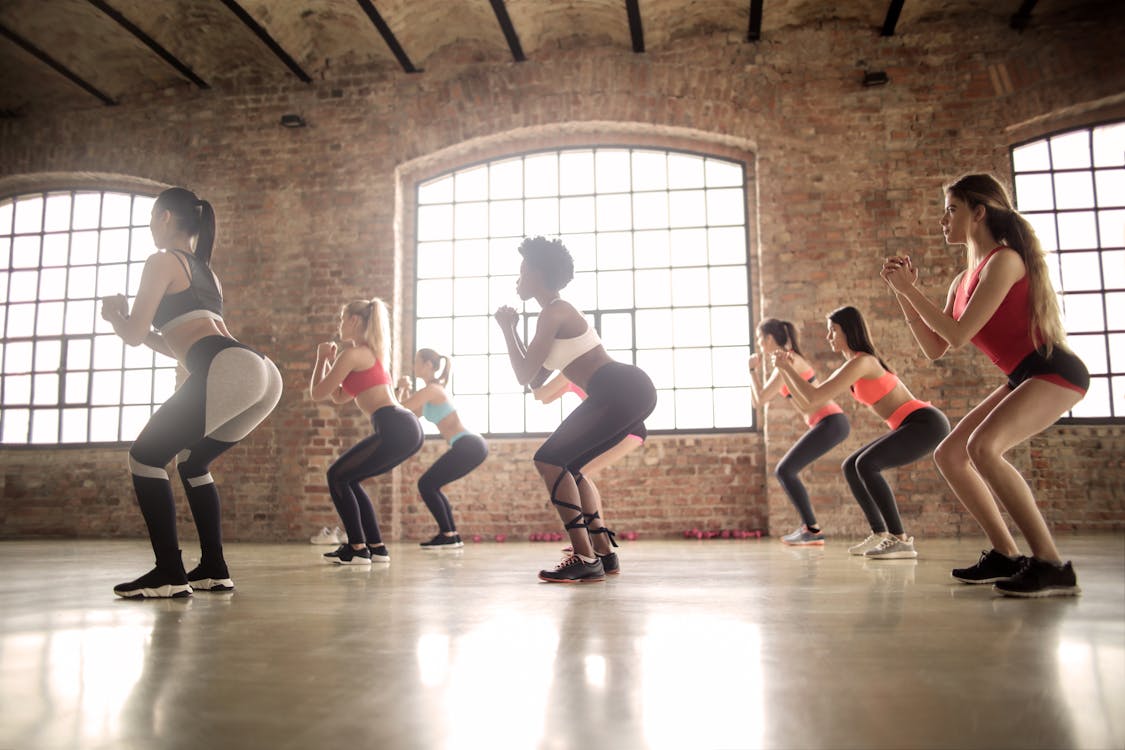
The squat pattern involves bending at the hips and knees to lower your body, then standing back up. It trains your quadriceps, hamstrings, glutes, and core. The basic bodyweight squat is where everyone should start. Stand with feet roughly shoulder-width apart, toes pointed slightly outward. Push your hips back as if sitting into a chair while keeping your chest up and your weight in your mid-foot to heels. Descend until your thighs are at least parallel to the floor, then drive through your feet to stand. Once you can do three sets of 15 bodyweight squats with good form, you are ready to add resistance with a goblet squat, holding a dumbbell at your chest.
The hinge pattern involves bending forward at the hips while keeping your spine neutral, then extending back to standing. It primarily targets your hamstrings, glutes, and lower back, which together form your posterior chain, one of the most important muscle groups for both athletic performance and everyday function. The Romanian deadlift is the best starting variation. Hold a pair of dumbbells in front of your thighs, then push your hips backward while lowering the weights along your legs. Your knees should bend slightly but the movement comes from your hips. You should feel a stretch in your hamstrings. Once the weights reach mid-shin level, squeeze your glutes to return to standing.
The push pattern covers any movement where you push a resistance away from your body. This trains your chest, shoulders, and triceps. The push-up is the foundational push exercise. If a full push-up is too difficult, start with your hands on an elevated surface like a bench or countertop. As you get stronger, gradually lower the surface height until you can perform push-ups from the floor. When bodyweight push-ups become easy, progress to dumbbell bench presses or overhead presses.
The pull pattern is the opposite, involving pulling resistance toward your body. It trains your back, biceps, and rear shoulders. Dumbbell rows are an excellent starting exercise. Place one hand and one knee on a bench for support, then use your other hand to row a dumbbell from a hanging position to your hip, keeping your elbow close to your body. Lat pulldowns on a cable machine are another great option for beginners who are not yet strong enough for pull-ups.
The carry pattern involves holding a heavy load and walking with it. This trains your grip, core stability, traps, and overall body tension. Farmer's walks are the simplest version. Pick up the heaviest dumbbells you can hold, stand tall, and walk for 30 to 40 meters. This exercise looks simple but challenges your entire body and builds the kind of practical strength that directly translates to real life.
Designing Your First Workout Program
Beginners make the best gains of their entire training career because everything is new stimulus. This means you do not need a complicated program. In fact, simplicity is an advantage because it lets you focus on learning proper form and building the habit of consistent training.
Train three days per week with at least one rest day between sessions. Full-body workouts are ideal for beginners because they allow you to practice each movement pattern multiple times per week, which accelerates the learning process.
A solid beginner program might look like this. On each training day, perform one squat variation, one hinge variation, one push variation, one pull variation, and one carry or core exercise. Do three sets of eight to twelve repetitions for each exercise, resting 60 to 90 seconds between sets. The entire workout should take 45 to 60 minutes.
For the first two weeks, use light weights that feel almost too easy. This is not wasted time. You are building motor patterns and teaching your nervous system how to coordinate your muscles during these movements. Trying to lift heavy before your form is solid is how injuries happen.
Starting in week three, begin increasing the weight gradually. The principle of progressive overload states that your muscles need to be challenged beyond their current capacity in order to grow stronger. Each week, try to add a small amount of weight to each exercise or do one or two additional reps with the same weight. These small increments compound over time into significant strength gains.
Understanding Sets, Reps, and Weight Selection
Sets and reps are the basic currency of strength training. A rep, or repetition, is one complete execution of an exercise. A set is a group of consecutive reps performed without rest.
For building muscle and strength as a beginner, the sweet spot is three to four sets of eight to twelve reps per exercise. This rep range provides enough mechanical tension to stimulate muscle growth while allowing you to maintain good form throughout the set.
Weight selection is more art than science initially. You want a weight that feels challenging during the last two to three reps of each set but does not cause your form to break down. If you can complete all your reps easily with perfect form, the weight is too light. If you cannot complete the prescribed reps or your form deteriorates significantly, the weight is too heavy.
A practical approach is to start with a weight you can lift for 15 reps, then use that weight for sets of 10. As you get stronger and 10 reps becomes easy, increase the weight by the smallest increment available, usually five pounds for upper body exercises and ten pounds for lower body exercises.
The Importance of Proper Form
Form is not about being a perfectionist. It is about directing the stress of the exercise to the intended muscles while protecting your joints and spine. Every injury you hear about from weight training, whether it is a blown-out knee, a herniated disc, or a torn rotator cuff, was caused by either too much weight, poor form, or both.
Keep these universal principles in mind for every exercise. Maintain a neutral spine, meaning your back maintains its natural curves without excessive rounding or arching. Breathe properly by inhaling during the lowering phase and exhaling during the lifting phase. Never hold your breath. Move through a full range of motion, because partial reps produce partial results. Control the weight rather than letting momentum do the work, particularly during the lowering phase of each rep.
If you are unsure about your form, film yourself performing the exercise from the side and compare it to instructional videos from reputable sources. Even better, invest in a few sessions with a qualified personal trainer who can provide real-time feedback and corrections.
Recovery Is Where the Growth Happens
A common beginner mistake is thinking that more training equals faster results. The opposite is true. Your muscles do not grow during your workout. They grow during the recovery period between workouts, when your body repairs the microscopic muscle fiber damage caused by training and builds them back slightly stronger than before.
This process requires three things. Adequate rest, meaning at least 48 hours between training the same muscle group, which is why three full-body sessions per week works so well for beginners. Sufficient protein intake, with a target of approximately 0.7 to 1 gram per pound of body weight per day to provide the amino acids your muscles need for repair. And quality sleep of seven to nine hours per night, during which your body releases the majority of growth hormone and performs most of its tissue repair.
If you train hard but do not eat enough protein or sleep enough, you are essentially tearing your muscles down without giving your body the resources to build them back up. The result is stalled progress, chronic fatigue, and increased injury risk.
Common Beginner Mistakes to Avoid
The first mistake is program hopping. Beginners often switch programs every few weeks because they are not seeing dramatic results fast enough. Stick with one well-designed program for at least eight to twelve weeks before evaluating whether it is working. Consistency with a mediocre program will always outperform inconsistency with the perfect program.
The second mistake is neglecting the lower body. Many beginners, particularly men, gravitate toward bench presses and bicep curls while ignoring squats, deadlifts, and lunges. Your legs contain the largest muscles in your body. Training them produces the greatest hormonal response, burns the most calories, and builds the most functional strength.
The third mistake is ego lifting, which means using more weight than you can handle with good form to impress others or satisfy your ego. Nobody in the gym is watching you or judging what weight you use. The person squatting 95 pounds with perfect form is doing more for their body than the person swinging 225 pounds with terrible technique.
The fourth mistake is ignoring warm-ups. Five to ten minutes of light cardiovascular activity followed by dynamic stretches and a few light sets of your first exercise prepares your muscles, joints, and nervous system for the demands of training. Skipping this step increases injury risk and reduces performance.
What to Expect in Your First Few Months
During the first one to two weeks, expect to feel sore. This is called delayed onset muscle soreness and it is a normal response to new training stimulus. It does not mean you worked out too hard or did something wrong. It will diminish significantly as your body adapts. Light movement, staying hydrated, and adequate protein intake all help manage soreness.
During weeks two through four, your strength will increase noticeably, but this is primarily neurological adaptation. Your nervous system is learning to recruit your muscle fibers more efficiently. You are getting better at the movements, not necessarily bigger.
From months one through three, you will start seeing visible changes in your body composition. Your muscles will begin to take shape, your posture will improve, and your clothes will fit differently. This is the phase where most beginners become hooked because the tangible results reinforce the effort.
Beyond three months, you have built a solid foundation of strength, form, and habit. From here, you can start exploring more advanced training techniques, higher volumes, and specific programs tailored to your goals, whether those are building maximum muscle, increasing strength, improving athletic performance, or simply maintaining your health for decades to come.
Getting Started Today
You do not need a fancy gym, expensive equipment, or perfect conditions. A pair of adjustable dumbbells and a bench can support an effective strength training program for years. Many effective exercises require nothing but your own body weight.
What you do need is the willingness to start, the patience to learn, and the commitment to show up three times per week regardless of how motivated you feel. Motivation is unreliable. It comes and goes. Building a routine that you follow whether you feel like it or not is what separates people who get results from people who stay stuck at the starting line.
Pick a day this week to begin. Choose five exercises covering the five fundamental patterns. Use light weights and focus on form. Do three sets of ten reps each. The entire workout will take less than an hour. And when you finish, you will have taken the single most important step in the process, which is simply starting.
Sources and Further Reading
Health and Beyond uses reputable medical and scientific sources where possible. These links support or expand on the topics discussed above.
- CDC: Physical Activity Basicscdc.gov
- HHS: Physical Activity Guidelineshealth.gov