If you could choose only one form of exercise for the rest of your life, strength training would be the smartest choice. That might surprise you if you associate exercise primarily with cardiovascular fitness, but the evidence is unambiguous: resistance training provides the broadest range of health benefits of any single exercise modality. It builds muscle, strengthens bones, improves metabolic health, protects joints, enhances cognitive function, reduces injury risk, combats age-related decline, and improves body composition in ways that cardio alone cannot match.
Yet despite these benefits, most people who start strength training either never begin a structured program or quit within the first few months. The barrier isn't usually motivation — it's uncertainty. The gym feels intimidating. The equipment is unfamiliar. The fear of doing something wrong and getting injured is real. And the sheer volume of conflicting advice online creates paralysis rather than action.
This guide cuts through that noise. It covers what you actually need to know to start safely, progress consistently, and build a sustainable strength training practice that serves you for decades.
Why Strength Training Matters More Than You Think
The health benefits of strength training extend far beyond bigger muscles.
Bone density increases in response to the mechanical loading that strength training provides. According to the National Osteoporosis Foundation, resistance training is one of the most effective interventions for maintaining and building bone density, reducing fracture risk as you age.
Metabolic health improves because muscle tissue is metabolically active — it burns calories at rest, improves insulin sensitivity, and helps regulate blood sugar. A meta-analysis published in Sports Medicine found that strength training alone (without dietary changes) significantly reduced body fat percentage, visceral fat, and HbA1c levels.
Joint health improves because strong muscles stabilize and protect joints, reducing the risk of osteoarthritis progression and improving function in people with existing joint conditions. Contrary to the old myth that lifting weights damages joints, properly performed strength training actually protects them.
Cognitive function benefits from strength training through multiple mechanisms including increased blood flow to the brain, enhanced neuroplasticity, and improved sleep quality. Research from the University of Sydney found that strength training improved cognitive function in adults with mild cognitive impairment.
Longevity is directly associated with muscle strength. A large-scale study published in the BMJ found that muscle strength was inversely associated with all-cause mortality — stronger people live longer, even after adjusting for cardiovascular fitness and other confounders.
Essential Concepts for Beginners
Progressive Overload
Progressive overload is the fundamental principle behind all strength gains. Your body adapts to the demands you place on it, so to continue getting stronger, you must progressively increase those demands over time. This can mean adding weight, performing more repetitions, doing more sets, improving form quality, or reducing rest periods.
For beginners, progressive overload happens almost effortlessly. Your neuromuscular system is learning new movement patterns, and your initial strength gains come primarily from improved neural efficiency — your brain getting better at recruiting muscle fibers — rather than from actual muscle growth. This means beginners can often add weight to their exercises every session for the first several months.
Compound vs. Isolation Exercises
Compound exercises work multiple joints and muscle groups simultaneously — squats, deadlifts, bench press, rows, overhead press. Isolation exercises target a single muscle group — bicep curls, tricep extensions, calf raises.
For beginners, compound exercises should form the foundation of your program. They train more muscle mass per exercise, burn more calories, build functional strength that transfers to daily activities, and are more time-efficient. Isolation exercises can be added later to address specific weaknesses or aesthetic goals.
Form Before Weight
This principle cannot be overemphasized. Learning proper movement patterns with light weight (or no weight at all) before adding load prevents injuries and builds the movement foundation that supports long-term progress.
Ego is the biggest obstacle here. The desire to lift heavy to feel accomplished leads beginners to use weights they can't control with good form. Every experienced lifter will tell you the same thing: spending your first weeks or months mastering movement quality with lighter weights is the fastest path to long-term strength because it prevents the injuries that sideline progress.
The Essential Exercises
These six movements form the foundation of virtually every effective strength training program. Master these, and you have everything you need for comprehensive full-body strength.
The Squat
The squat trains the entire lower body — quadriceps, glutes, hamstrings, and core — and is arguably the most functional exercise that exists, mimicking the fundamental human movement of sitting and standing.
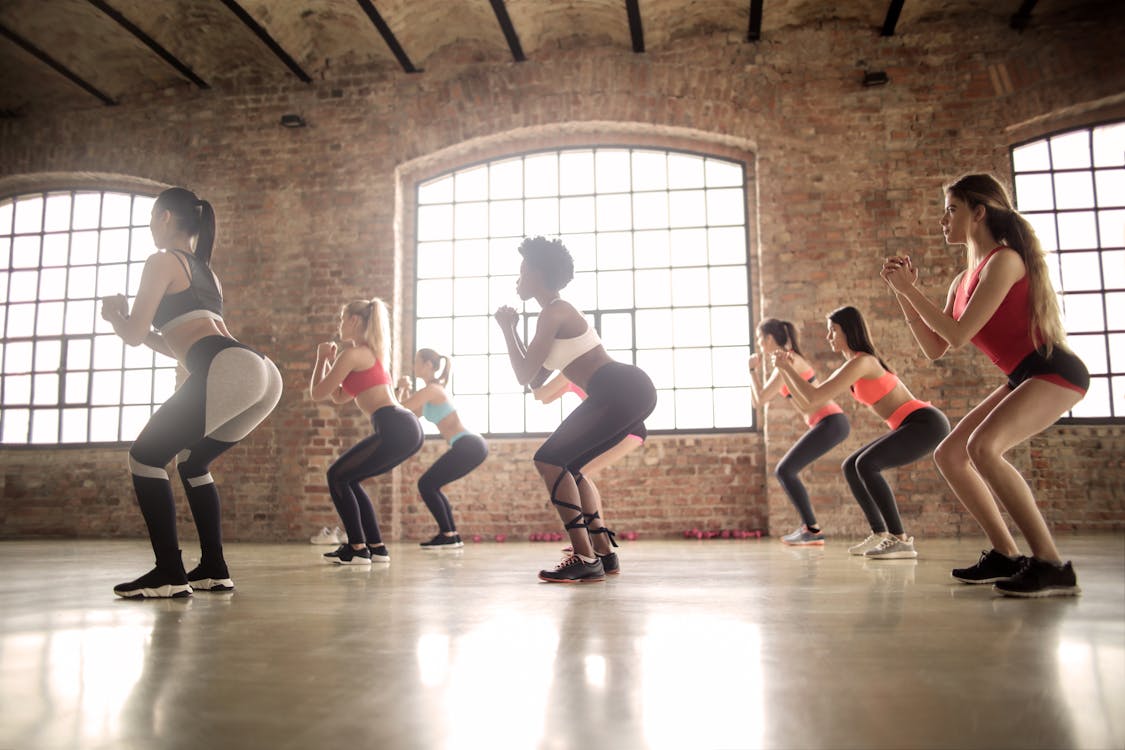
For beginners, start with bodyweight squats or goblet squats (holding a single weight at chest height). Stand with feet shoulder-width apart, toes slightly turned out. Push your hips back and bend your knees, lowering until your thighs are at least parallel to the floor (or as deep as comfortable with good form). Drive through your whole foot to stand.
Common mistakes include letting knees cave inward (push them out over your toes), rounding the lower back (maintain a neutral spine), and rising onto toes (keep weight distributed across the entire foot).
The Deadlift
The deadlift trains the posterior chain — glutes, hamstrings, lower back, upper back, and grip. It's the most effective exercise for building total-body strength and trains the essential movement pattern of picking things up from the ground safely.
Begin with the Romanian deadlift (RDL) variation, which starts from standing rather than the floor and is more accessible for beginners. Hold a weight in front of your thighs. Hinge at the hips, pushing your butt back while maintaining a flat back. Lower the weight along your legs until you feel a stretch in your hamstrings, then drive your hips forward to return to standing.
The Bench Press or Push-Up
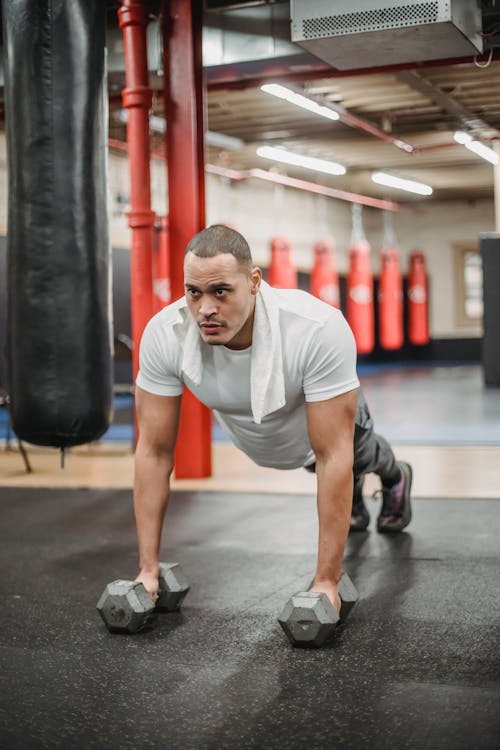
These train the chest, shoulders, and triceps. If you're not comfortable with a barbell bench press initially, push-ups are an excellent alternative that require no equipment and can be scaled from wall push-ups (easiest) to incline push-ups (moderate) to floor push-ups (standard) to decline push-ups (advanced).
For bench press, lie on a flat bench with eyes directly under the bar. Grip the bar slightly wider than shoulder width. Unrack and lower the bar to your mid-chest, then press straight up. Keep your shoulder blades squeezed together and your feet flat on the floor.
The Row
Rows train the back muscles — lats, rhomboids, rear deltoids, and biceps — counterbalancing all the pushing exercises and building the postural strength that prevents the rounded-shoulder posture endemic to desk workers.
The dumbbell row is the most beginner-friendly variation. Place one hand and one knee on a bench for support, holding a dumbbell in the other hand. Pull the weight to your hip, squeezing your shoulder blade back and down. Lower with control.
The Overhead Press
The overhead press trains the shoulders, upper chest, and triceps while demanding core stability. Stand with feet shoulder-width apart, holding dumbbells at shoulder height. Press the weights straight overhead until your arms are fully extended. Lower with control.
This exercise also serves as a screening tool — difficulty pressing overhead may indicate shoulder mobility limitations that should be addressed with stretching and mobility work.
The Carry
Loaded carries — simply picking up heavy weights and walking with them — train grip strength, core stability, shoulder stability, and overall work capacity. Farmer carries (a heavy weight in each hand) are the simplest version. Walk with tall posture for 30-60 seconds per set.
Carries don't get as much attention as the big lifts, but they build the real-world functional strength that translates most directly to daily life activities.
Your First 12-Week Program
Weeks 1-4: Learning Phase
Train 3 days per week (for example, Monday, Wednesday, Friday). Each session includes all six foundational movements with light weight focused on learning proper form.
Each exercise: 3 sets of 10-12 repetitions with weight that feels moderate (you should have 3-4 repetitions "in reserve" at the end of each set). Rest 60-90 seconds between sets. The entire workout should take 45-55 minutes.
Weeks 5-8: Building Phase
Continue 3 days per week. Increase weight modestly on each exercise (the smallest increment available — usually 2.5-5 pounds). Move to 3 sets of 8-10 repetitions. You should be working harder than the first four weeks — the last 2-3 reps of each set should feel challenging.
Begin adding one isolation exercise per session if time permits (bicep curls, tricep extensions, lateral raises, or calf raises).
Weeks 9-12: Progression Phase
Continue 3 days per week. By now, your form should be solid and weights are becoming meaningful. Use 4 sets of 6-8 repetitions for compound exercises, increasing weight when you can complete all prescribed reps with good form. Keep 2-3 isolation exercises at 3 sets of 10-12 repetitions.
After 12 weeks, you'll have built a solid foundation and can transition to more advanced programming based on your specific goals.
Equipment Essentials
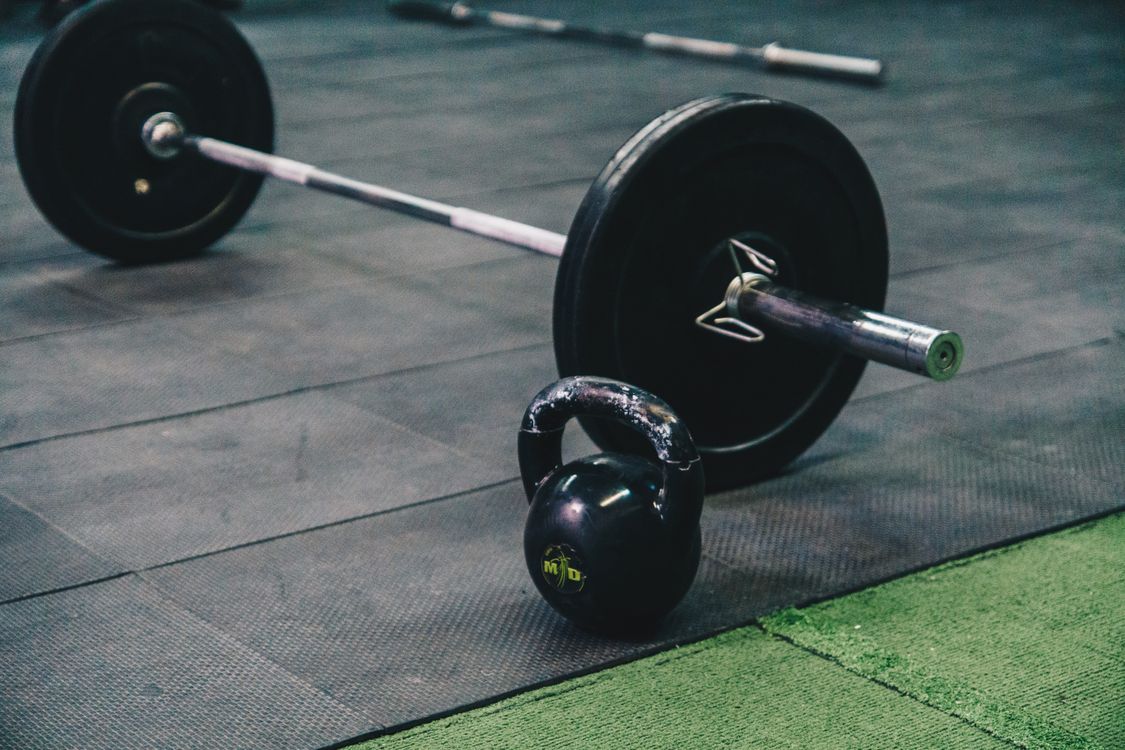
A minimal home gym requires only dumbbells (an adjustable set from 10-50 pounds covers most beginners), a flat bench (or sturdy chair), and a pull-up bar (optional but valuable).
At a commercial gym, you'll use dumbbells, barbells, cable machines, and potentially some plate-loaded machines. Don't feel pressured to use equipment you're not comfortable with — dumbbells alone can provide a complete training stimulus for beginners.
The American College of Sports Medicine recommends strength training all major muscle groups at least twice per week for health benefits, confirming that a 3-day-per-week full-body program exceeds minimum recommendations.
Recovery and Nutrition
Rest Days
Muscles don't grow during training — they grow during recovery. Training creates the stimulus; rest provides the adaptation. Beginners should take at least one day off between strength training sessions, which is why a Monday-Wednesday-Friday schedule works well.
Sleep is the single most important recovery variable. During deep sleep, growth hormone release peaks, protein synthesis accelerates, and nervous system recovery occurs. Aim for 7-9 hours of quality sleep per night.
Protein
Protein provides the amino acids that muscles use for repair and growth. Research consistently supports a daily intake of 0.7-1 gram of protein per pound of bodyweight for people engaged in regular strength training.
Distribute protein intake across the day — 20-40 grams per meal — rather than consuming it all at once. Good sources include chicken, fish, eggs, dairy, legumes, tofu, and protein supplements if whole food sources are insufficient.
Hydration
Dehydration impairs strength, recovery, and cognitive function. Drink enough water that your urine is pale yellow throughout the day. During training, sip water between sets.
Mindset for Long-Term Success
Strength training is a decades-long practice, not a 12-week transformation. The most important quality isn't intensity, discipline, or motivation — it's consistency. Showing up three times per week, doing the work with reasonable effort and decent form, and gradually increasing demands over months and years produces extraordinary results that no short-term extreme program can match.
Expect non-linear progress. Some weeks you'll feel strong and add weight easily. Other weeks, life stress, poor sleep, or hormonal fluctuations will make the same weights feel heavier. This is normal. The trajectory matters, not the individual data points.
Compare yourself only to your past self. The person squatting 300 pounds next to you started with an empty bar or bodyweight, just like you. Everyone's starting point, rate of progress, and genetic potential differs. The only meaningful comparison is between where you are today and where you were last month.
Strength training changes more than your body. The discipline, patience, and progressive mastery involved in getting stronger reliably transfer to other areas of life. The confidence that comes from knowing you can handle physical challenges — carrying groceries, moving furniture, playing with your kids without pain — is a quality of life improvement that no number on a scale can capture.