The fitness industry wants you to believe that building a strong, lean body requires expensive gym memberships, complicated machines, and racks of dumbbells. Gymnasts, military special forces operators, and martial artists have known for decades that this is simply not true. Your body is the most versatile piece of training equipment you will ever own, and it is available twenty-four hours a day, seven days a week, wherever you are.
Bodyweight training — also called calisthenics — uses your own mass as resistance to build strength, muscle, endurance, and flexibility simultaneously. Unlike machine-based exercises that isolate individual muscles, bodyweight movements engage multiple muscle groups and joints at once, developing functional strength that translates directly into real-world activities.
This guide breaks down the science behind bodyweight training, provides progressive routines for every level, and shows you exactly how to build an impressive physique without ever stepping foot in a gym.
The Science Behind Bodyweight Muscle Growth
Muscle growth (hypertrophy) occurs when muscle fibers sustain mechanical tension, metabolic stress, and muscle damage during resistance exercise. The common misconception is that heavy external weights are required to generate these stimuli. Research tells a different story.
A study published in the Journal of Exercise Science and Fitness found that low-load resistance training performed to failure produces comparable muscle hypertrophy to high-load training. What matters is not the absolute load but the proximity to muscular failure. When you perform push-ups until you physically cannot complete another repetition, the final few reps recruit the same high-threshold motor units that a heavy bench press activates.
The key principles for building muscle with bodyweight exercises are progressive overload, time under tension, and training volume. Progressive overload means gradually making exercises harder over time. With weights, you add plates. With bodyweight, you change leverage angles, reduce points of contact, add pauses, slow the tempo, or progress to more challenging variations.
Essential Bodyweight Exercises and Proper Form
Push-Up Variations (Chest, Shoulders, Triceps)
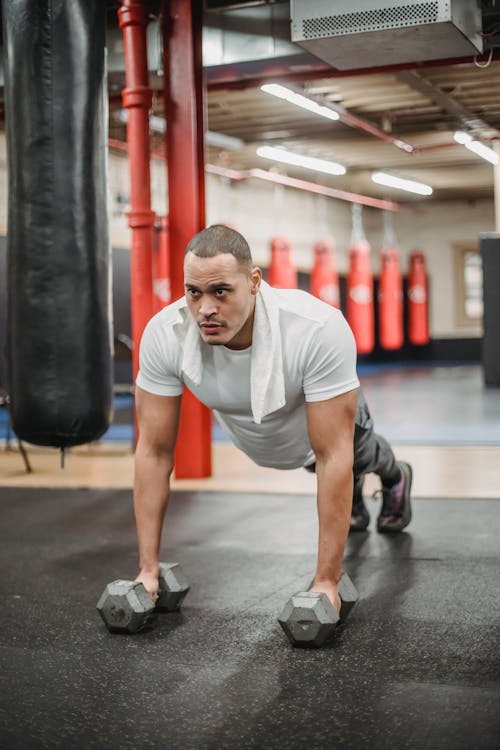
The push-up is the foundation of upper-body bodyweight training. A standard push-up engages the pectorals, anterior deltoids, triceps, and core simultaneously. Position your hands slightly wider than shoulder-width apart, maintain a rigid plank from head to heels, lower your chest until it nearly touches the floor, and press back up.
Beginner progression: wall push-ups, incline push-ups (hands on a bench), knee push-ups, standard push-ups. Intermediate progression: diamond push-ups (hands close together under the chest), decline push-ups (feet elevated), archer push-ups (one arm extended wide). Advanced progression: one-arm push-up negatives, one-arm push-ups, planche push-ups.
Each variation shifts the mechanical load and emphasizes different muscle groups. Diamond push-ups place greater demand on the triceps. Decline push-ups target the upper chest and shoulders. Archer push-ups develop unilateral strength that bridges the gap to one-arm work.
Pull-Up Variations (Back, Biceps)
Pull-ups are arguably the most effective upper-body exercise in existence. They engage the latissimus dorsi, rhomboids, trapezius, biceps, brachialis, and forearm muscles. A standard pull-up begins from a dead hang with palms facing away from you (overhand grip). Pull your chest toward the bar by driving your elbows down and back. Lower yourself under control to full arm extension.
If you cannot yet perform a full pull-up, start with dead hangs (simply holding the bar), then progress to flexed-arm hangs (holding the top position), negative pull-ups (jumping to the top and lowering slowly over five seconds), and band-assisted pull-ups. Most beginners can achieve their first unassisted pull-up within four to eight weeks using this progression.
Advanced progressions include close-grip pull-ups, wide-grip pull-ups, L-sit pull-ups (legs extended in front of you), archer pull-ups, and eventually one-arm pull-up training. A doorframe pull-up bar costs about twenty dollars and opens up the entire pull-up progression chain.
Squat Variations (Quadriceps, Glutes, Hamstrings)
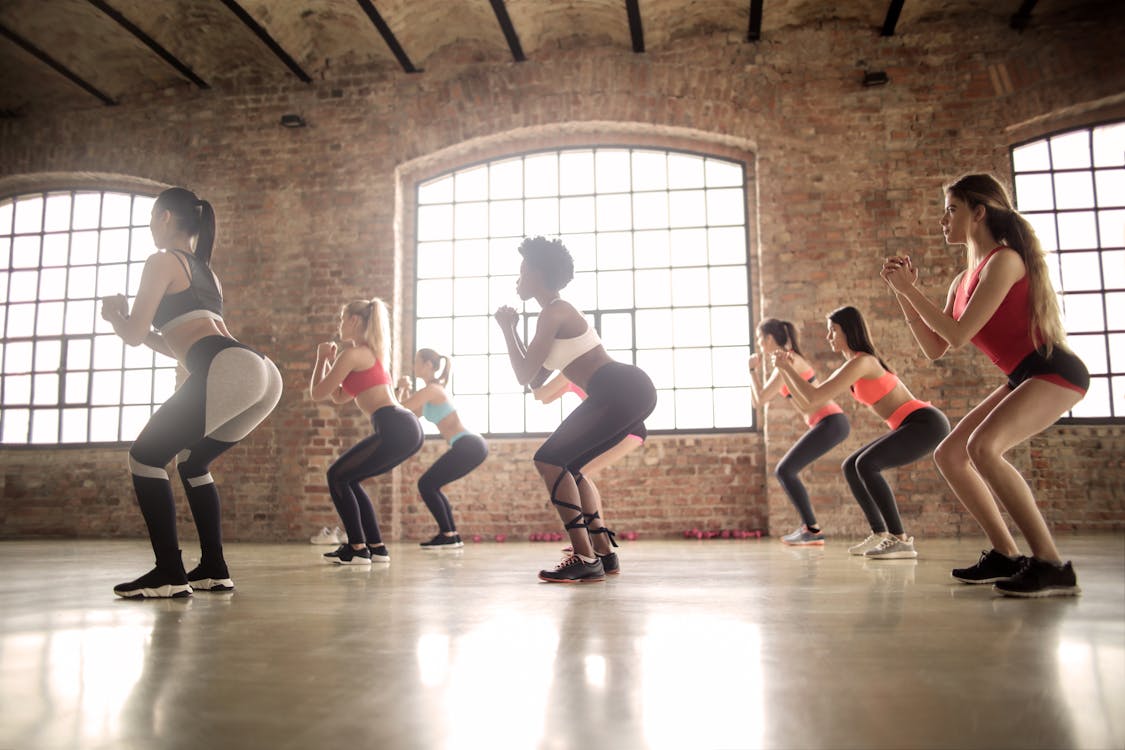
The squat pattern is fundamental to human movement. Stand with feet shoulder-width apart, toes slightly turned out. Push your hips back and bend your knees, lowering until your thighs are parallel to the ground or deeper if mobility allows. Drive through your entire foot to stand back up.
Beginner progression: assisted squats (holding a doorframe), box squats, standard squats. Intermediate progression: pause squats (three-second hold at the bottom), jump squats, Bulgarian split squats (rear foot elevated on a bench). Advanced progression: pistol squats (single-leg squats), shrimp squats, sissy squats.
According to research from the American Council on Exercise, single-leg squat variations produce sufficient muscle activation in the quadriceps and glutes to drive significant hypertrophy, even in trained individuals. The balance and stability demands of single-leg work also strengthen the knee joint and improve athletic performance.
Dip Variations (Chest, Triceps, Shoulders)
Dips are the upper-body equivalent of squats — a compound movement that builds tremendous pressing strength. Using parallel bars, two sturdy chairs, or a kitchen counter, lower your body by bending your elbows until your upper arms are parallel to the ground. Press back up to full arm extension.
A slight forward lean targets the chest more heavily, while an upright torso emphasizes the triceps. Beginners can start with bench dips (hands on a bench behind you, feet on the ground) and progress to full parallel bar dips, then weighted dips using a backpack filled with books or water bottles.
Hinge Variations (Hamstrings, Glutes, Lower Back)
The hip hinge pattern targets the posterior chain — hamstrings, glutes, and erector spinae. Single-leg Romanian deadlifts are the gold standard bodyweight hinge exercise. Stand on one leg, hinge forward at the hips while extending the opposite leg behind you, and reach toward the floor. The standing leg should have a slight bend at the knee. Return to standing by squeezing your glute.
Nordic hamstring curls are another exceptional bodyweight exercise for the posterior chain. Kneel on a pad with your feet anchored under a heavy object. Slowly lower your torso toward the ground by extending at the knees while maintaining a rigid body from knees to shoulders. This exercise has been shown to reduce hamstring injury rates by up to 51 percent in athletes.
Core Training
Bodyweight training naturally engages the core more than machine-based training because you must stabilize your own body through space. However, targeted core work builds a stronger foundation for every other exercise.
Hollow body holds develop the anterior core. Lie on your back, press your lower back into the floor, and lift your shoulders and legs off the ground simultaneously. Your body should form a shallow banana shape. Hold this position for time, starting at fifteen seconds and building to sixty seconds.
Planks, side planks, dead bugs, and hanging leg raises round out a complete core program. Focus on anti-extension (resisting arching), anti-rotation (resisting twisting), and anti-lateral-flexion (resisting side bending) rather than endless crunches.
Programming: Structuring Your Training Week
Effective bodyweight training follows the same programming principles as weight training: adequate volume, sufficient intensity, progressive overload, and planned recovery.
Three-Day Full-Body Program (Beginners)
Train Monday, Wednesday, and Friday. Each session covers all major movement patterns.
Session structure: push-ups (three sets to near failure), rows or pull-up negatives (three sets to near failure), squats (three sets of fifteen to twenty), lunges (two sets of twelve each leg), dips or bench dips (three sets to near failure), hip hinge variation (two sets of twelve each leg), plank hold (three sets of thirty to sixty seconds). Rest sixty to ninety seconds between sets.
This program provides nine to twelve working sets per muscle group per week — sufficient stimulus for beginners to build muscle and strength rapidly. Track your total reps each session and aim to beat your numbers by at least one rep per set the following week.
Four-Day Upper-Lower Split (Intermediate)
Monday and Thursday: upper body. Tuesday and Friday: lower body. This split allows more volume per muscle group while providing adequate recovery.
Upper day: push-ups (four sets), dips (three sets), pull-ups (four sets), inverted rows (three sets), pike push-ups (three sets for shoulders), diamond push-ups (three sets for triceps). Lower day: Bulgarian split squats (four sets each leg), Nordic curls (three sets), single-leg Romanian deadlifts (three sets each leg), jump squats (three sets), calf raises (four sets), hollow body holds (three sets).
Progressive Overload Without Weights
Progressive overload is the single most important principle for continued progress. Without adding weight to a barbell, you can increase difficulty through several methods.
Reduce leverage advantage by elevating your feet during push-ups, performing archer variations, or transitioning to single-limb exercises. Increase time under tension by slowing the lowering phase to four or five seconds. Add pauses at the most challenging position — the bottom of a push-up, the bottom of a squat, the top of a pull-up. Increase range of motion by using deficit push-ups (hands on books or blocks) or deep step-ups.
The most powerful progression tool is moving toward single-limb variations. A pistol squat places your full body weight on one leg, effectively doubling the load compared to a standard squat. An archer push-up shifts the majority of your weight onto one arm. These progressions can challenge even advanced athletes for years.
Nutrition for Bodyweight Training
Training provides the stimulus for muscle growth, but nutrition provides the raw materials. Without adequate protein and overall calories, your body cannot repair and build new muscle tissue, regardless of how hard you train.
Aim for 0.7 to 1.0 grams of protein per pound of body weight daily, distributed across three to four meals. Complete protein sources include chicken, fish, eggs, dairy, legumes combined with grains, and soy products. If fat loss is your primary goal, maintain a moderate caloric deficit of 300 to 500 calories below your maintenance level while keeping protein high to preserve muscle mass.
Carbohydrates fuel high-intensity bodyweight training. Consume complex carbohydrates like oats, rice, sweet potatoes, and fruits before training sessions for optimal performance. Post-workout meals should combine protein and carbohydrates to initiate recovery and replenish glycogen stores.
Hydration matters more than most people realize. Even mild dehydration reduces strength output and impairs recovery. Aim for half your body weight in ounces of water daily, adding more on training days.
Recovery and Injury Prevention
Bodyweight training places unique demands on joints and connective tissue, particularly the wrists, elbows, and shoulders. Warming up thoroughly before each session reduces injury risk and improves performance.
A proper warm-up includes five minutes of light cardio (jumping jacks, jogging in place), joint circles for the wrists, elbows, shoulders, hips, knees, and ankles, and two to three easy sets of the first exercise in your session at reduced intensity.
Sleep is the most powerful recovery tool available. During deep sleep, growth hormone release peaks, and the majority of muscle protein synthesis occurs. Seven to nine hours of quality sleep per night is non-negotiable for anyone serious about building muscle and losing fat.
Schedule at least one to two complete rest days per week. Active recovery — light walking, gentle stretching, or yoga — on rest days promotes blood flow to recovering muscles without adding training stress.
Cardio With Bodyweight Training
Bodyweight circuits and high-intensity interval training (HIIT) build cardiovascular fitness without separate cardio sessions. Perform a circuit of five to six bodyweight exercises with minimal rest between movements, rest two minutes after completing the circuit, and repeat three to five times.
Example HIIT circuit: jump squats for thirty seconds, push-ups for thirty seconds, mountain climbers for thirty seconds, burpees for thirty seconds, plank hold for thirty seconds. Rest ninety seconds. Repeat four rounds.
This approach burns significant calories, elevates your metabolic rate for hours after the session (the afterburn effect), and builds muscular endurance simultaneously. Two HIIT sessions per week, combined with three to four strength-focused sessions, creates a comprehensive fitness program.
The Long Game
Bodyweight training rewards patience and consistency. In your first month, expect rapid strength gains as your nervous system learns to recruit muscle fibers more efficiently. Visible muscle growth typically becomes apparent after six to eight weeks of consistent training. After six months, the transformations can be remarkable — not just in how you look, but in how you move, feel, and perform in daily life.
The beauty of calisthenics is that the skill ceiling is virtually unlimited. Even after years of training, new challenges await — muscle-ups, handstands, planche holds, human flags. Each new skill requires building strength, balance, and coordination in ways that keep training mentally engaging long after the novelty of a gym routine has worn off.
Start with the basics, master proper form, progress gradually, eat to support your goals, prioritize recovery, and trust the process. Your body is the only equipment you need.