Swimming is one of the most complete forms of exercise available. It works every major muscle group, builds cardiovascular fitness, supports joints rather than stressing them, and can be enjoyed at almost any age or fitness level. Despite these advantages, swimming remains underused by most adults as a fitness tool. The reasons are a mix of access, intimidation, and unfamiliarity with how to actually train in the water. For those willing to give it a real chance, swimming offers returns that few other activities match.
Why Swimming Is Different
Unlike land-based exercise, swimming takes place in a medium that is denser than air, buoyant, and thermally different from dry land. These features create unique advantages:
Low impact on joints. The buoyancy of water supports 90 percent of body weight. That means ankles, knees, hips, and spine experience minimal impact forces, even during vigorous exercise.
Full-body engagement. Proper swimming works the arms, shoulders, back, core, hips, and legs in coordinated patterns. Few other activities demand this total-body integration.
Cardiovascular and muscular endurance. Swimming hard trains the heart, lungs, and muscles simultaneously. A quality swim session is a thorough workout.
Resistance without weights. Water resistance provides a natural and adjustable load. The faster you move, the more resistance you generate. This trains strength and power without the equipment required for weight training.
Cooling effect. The body does not heat up the way it does during running or cycling in warm conditions. This allows sustained effort and quick recovery.
Breathing training. Rhythmic breathing coordinated with arm strokes builds respiratory strength and efficiency that carries over into other activities.
Benefits of Regular Swimming
Research on swimming consistently shows benefits similar to other forms of aerobic exercise, with several unique advantages.
Cardiovascular health. Regular swimming improves blood pressure, cholesterol, endothelial function, and overall heart disease markers.
Respiratory strength. Controlled breathing patterns improve lung capacity and efficiency, benefits that persist even when not in the pool.
Bone health. Historically, swimming was thought to provide less benefit for bones than impact activities. More recent research suggests it does contribute to bone health, particularly when combined with some weight-bearing activity.
Musculoskeletal health. For people with arthritis, back pain, fibromyalgia, and other conditions, swimming often provides meaningful fitness benefits that other exercise cannot.
Mental health. The rhythmic, immersive nature of swimming is calming for many people. Studies show reductions in stress, anxiety, and depression.
Longevity. Long-term studies suggest regular swimmers have lower all-cause mortality than non-exercisers, comparable to other forms of exercise.
Who Swimming Is Especially Good For
People with joint pain or arthritis. The buoyancy of water makes full-body exercise possible without pain.
Pregnant women. Low-impact exercise that supports the growing body.
Older adults. Maintains fitness without fall risk.
Athletes recovering from injury. Maintains conditioning without loading injured tissues.
People with asthma. The warm, humid air around pools is usually easier on airways than cold dry air outdoors.
Overweight individuals. The water supports body weight, making sustained exercise more comfortable.
People who find running or high-impact exercise uncomfortable. An excellent alternative that still builds serious fitness.
The Four Main Strokes
Swimming workouts usually draw from four competitive strokes, each with different emphases.
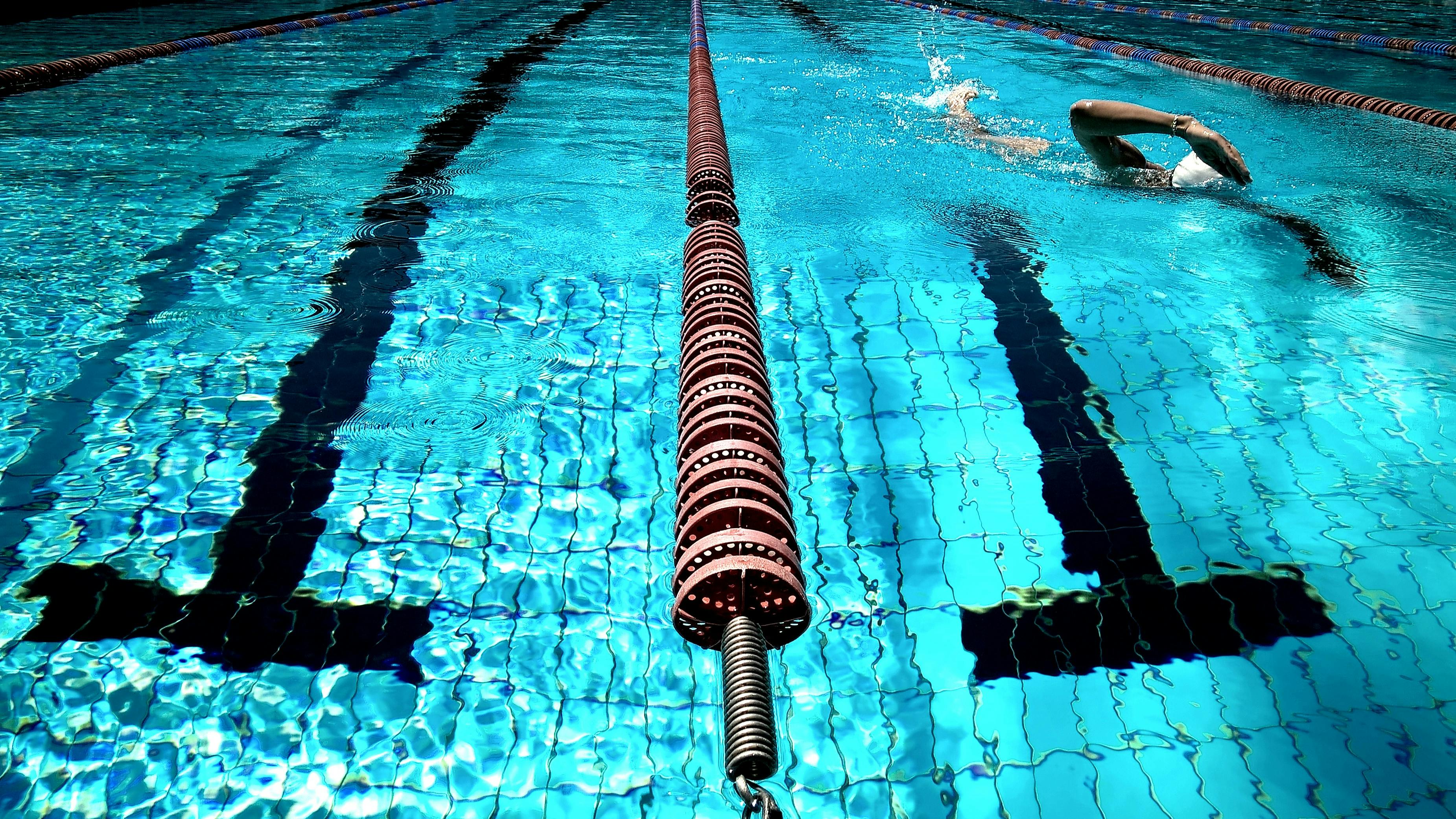
Freestyle (front crawl). The most efficient stroke and the go-to for fitness. Alternates arm strokes with a flutter kick and rhythmic side breathing. Engages lats, shoulders, chest, core, and legs.
Backstroke. Performed on the back, with alternating arm pulls overhead and flutter kick. Works similar muscles to freestyle but with different emphasis and opens the chest.
Breaststroke. Symmetric arm and leg movements performed in a frog-like pattern. Slower than freestyle but technical. Engages hips, inner thighs, and chest.
Butterfly. Simultaneous arm pulls combined with a dolphin kick. The most demanding stroke. Requires significant power, technique, and conditioning.
Most adult swimmers primarily use freestyle and backstroke, with breaststroke mixed in. Butterfly is technical and rarely essential for fitness purposes.
Technique Matters More Than Effort
Swimming more than any other sport rewards efficiency over raw effort. A technically good swimmer moving smoothly can outpace a strong athlete thrashing through the water. The difference comes down to reducing drag and converting effort into forward motion.
Key technique priorities for freestyle:
Body position. Horizontal body line, head in neutral position, hips high, feet not sinking. Poor body position creates enormous drag.
Long lines. Each stroke should extend fully forward and backward. Short choppy strokes waste energy.
Rotation. Effective freestyle rotates at the hips and shoulders with each stroke, generating power from the core rather than just arm effort.
Relaxed recovery. The arm returning forward should be relaxed, not tense.
Breathing. Head turns to the side for breath, low in the water (goggle touches the water), not lifted. Inefficient breathing patterns disrupt everything else.
Kick. Small, quick flutter from the hips, not the knees. The kick stabilizes more than propels in most adult swimming.
One session with a qualified swim coach or even a swim video analysis can transform technique and dramatically reduce effort required for a given distance.
Starting as an Adult
Many adults feel self-conscious about learning to swim or improving later in life. The reality is that swim classes for adults are common and effective at most YMCAs, community pools, and swim clubs. Adult learners often progress quickly because they can consciously attend to technique in ways that children cannot.
For adults who already know the basics but want to improve:
- Adult swim lessons, usually 6 to 8 sessions
- Masters swim programs, which are coached groups of adult swimmers at all levels
- Private coaching for personalized feedback
- Online technique programs (Swim Smooth, Total Immersion, etc.)
Building a Swim Workout
A structured swim workout includes several elements, similar to any quality training.
Warm-up (5 to 10 minutes). Easy swimming to loosen up. Typically a few hundred meters of mixed strokes or easy freestyle.
Drills (5 to 10 minutes). Technique-focused exercises that break down stroke elements. Common drills include one-arm freestyle, catch-up drill, fingertip drag, and kick drills with a board.
Main set (15 to 30 minutes). The bulk of the workout. Could be continuous swimming, intervals of various distances, or a mix. A beginner might swim 4 x 50 meters with rest. A more advanced swimmer might do 10 x 100 meters at specific intervals.
Cool-down (5 minutes). Easy swimming to flush the muscles.
Total: 30 to 60 minutes per session. Two to four sessions per week is a good target for fitness.
Interval Training in the Pool
Interval-based swimming is especially effective for fitness. Example sets for various levels:
Beginner (total 1000 meters):
- Warm-up: 200 meters easy
- Main: 8 x 50 meters with 30 seconds rest
- Cool-down: 200 meters easy
- Warm-up: 300 meters mixed
- Main: 4 x 200 meters with 45 seconds rest, moderate-hard pace
- Kick set: 200 meters with board
- Cool-down: 200 meters easy
- Warm-up: 400 meters
- Drill: 8 x 25 meters drill work
- Main: 10 x 100 meters on a tight interval
- Sprints: 8 x 25 meters all-out
- Cool-down: 300 meters easy
Essential Gear
Swimming requires minimal equipment, but a few items dramatically improve the experience.
Goggles. Essential. Try several until you find a comfortable, leak-free pair. Slightly tinted lenses are helpful for outdoor pools.
Proper swimwear. Fitted suits reduce drag. Brief-style or jammer swimsuits for men, fitted one-pieces for women. Loose shorts are not ideal for serious swimming.
Swim cap. Reduces drag and protects hair from chlorine.
Kickboard. For kick-focused drills.
Pull buoy. Placed between the legs to isolate the arms during drills.
Fins. Short training fins, not snorkel fins, improve kick technique and allow faster drills.
Hand paddles. For stroke-focused work. Use cautiously to avoid shoulder strain.
A modest gym bag with these fits everything needed for pool workouts.
Dealing With Chlorine
Regular swimming exposes skin, hair, and eyes to chlorine. A few strategies reduce problems:
- Shower and rinse with fresh water before and after swimming
- Apply a leave-in conditioner or swim-specific hair product before swimming
- Use quality goggles with a good seal
- Moisturize skin after swimming
- Consider a sea salt pool or outdoor lap swimming as alternatives if chlorine bothers you
Open Water Swimming
For those who grow beyond the pool, open water swimming (lakes, bays, oceans) offers a different challenge and experience. Benefits include the mental peace of being in nature, greater endurance training, and variety. Challenges include safety, temperature management, and navigation. Always swim with a partner or in organized groups, wear a bright cap or safety buoy, and respect weather and water conditions.
Common Pitfalls
Thinking you have to swim fast. Easy pace swimming at lower intensity for longer builds excellent fitness. Start there.
Ignoring technique. Long hours of poor technique entrench bad habits. A bit of coaching pays for itself quickly.
Skipping drills. Drills feel less productive than hard swimming but are where technique improvements actually happen.
Overtraining one pattern. Mixing strokes, kicking with fins, and occasional sprint work all benefit fitness and avoid repetitive strain.
Neglecting strength training outside the pool. Swimmers benefit from strength work for the shoulders, back, and core.
The Consistent Swimmer
The most noticeable thing about people who swim regularly as part of their fitness life is how broadly fit they are. Strong shoulders, mobile spines, good breath control, calm dispositions, and often lean bodies well into later decades. It is not the only path to fitness, but it is a particularly good one.
Swimming rewards patience, attention, and consistency. It does not deliver the instant cardiovascular punch of running or cycling, but over months and years, it builds a resilient, capable body that can handle whatever physical demands life brings.
For anyone reading this who has not been in a pool regularly since childhood, or ever, the invitation is simple. Find a pool. Take a few lessons. Start with 20 or 30 minutes twice a week. Give it three months. The water rewards those who show up.
Sources and Further Reading
Health and Beyond uses reputable medical and scientific sources where possible. These links support or expand on the topics discussed above.
- CDC: Physical Activity Basicscdc.gov
- HHS: Physical Activity Guidelineshealth.gov