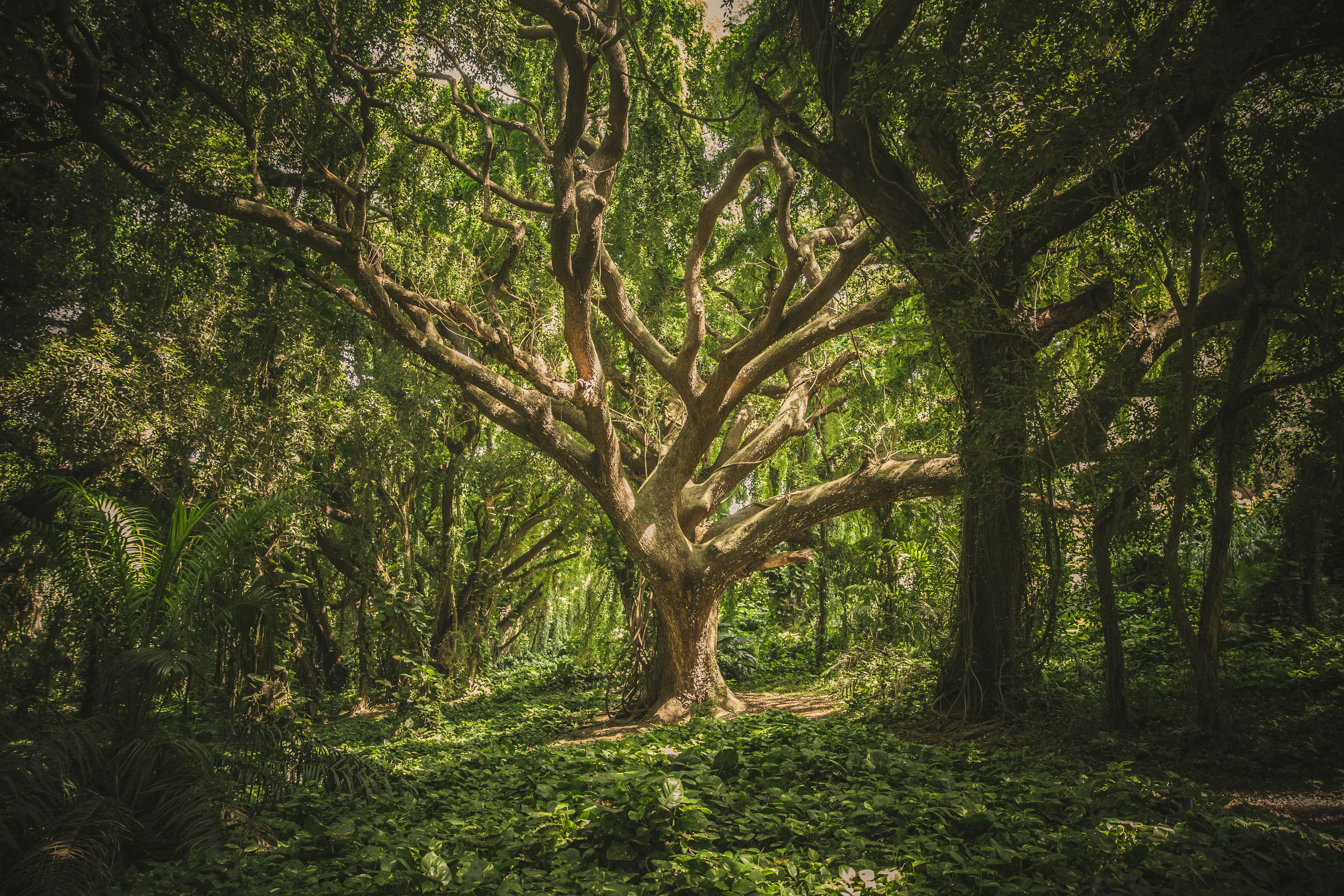
Forest bathing, translated from the Japanese term shinrin-yoku, sounds at first like an indulgent wellness trend. The practice involves spending deliberate time in forested environments, moving slowly, engaging all the senses, and not really doing much of anything. No hiking goal, no fitness tracker, no photography project, just being among trees. The concept seems simple to the point of emptiness, and skeptics have reasonable grounds for dismissing it as expensive nothing. What makes forest bathing worth taking seriously is the surprising depth of research showing that time spent among trees produces measurable physiological and psychological changes beyond what comparable time in other natural or urban environments provides.
The Japanese government began actively researching and promoting shinrin-yoku in the 1980s, largely as a response to the intense work culture that contributed to health problems and the condition called karoshi, or death from overwork. Official forest therapy sites were certified based on documented health benefits, and a growing body of research has accumulated across Asia and now Europe and North America. The findings have shifted forest bathing from cultural curiosity to evidence-based intervention, with real implications for how we think about human health in an increasingly urban world.
The Trees That Help Heal
Trees produce volatile organic compounds called phytoncides as part of their defense system against bacteria, fungi, and insects. These compounds, particularly abundant in coniferous forests, are part of what gives pine and cedar forests their distinctive scent. When people breathe air rich in phytoncides, the compounds have measurable effects on human immune function.
Research led by Dr. Qing Li at Nippon Medical School has shown that a single day spent in a forested environment increases the activity of natural killer cells, a type of immune cell that fights viruses and cancer cells. The effect persists for a week or more after a single exposure, and benefits accumulate with repeated forest time. Two days of forest bathing can sustain elevated immune function for 30 days or longer in some individuals.
The mechanism appears to involve direct effects of inhaled phytoncides on immune cells. Laboratory studies have shown that specific compounds present in forest air increase the activity of immune cells when placed in contact with them. The effects in forest environments are strongest in old growth areas with high tree density, though even urban parks and tree-lined areas provide some benefit.
Beyond phytoncides, forest environments contain higher concentrations of negatively charged air ions, which some research suggests may support immune function and mood. Forest air is also typically cleaner, cooler, and more humid than urban air, all factors that may contribute to the overall effect.
The Stress Response
The most robust research finding on forest bathing involves stress reduction. Measurements of cortisol, the primary stress hormone, show consistent reductions after time spent in forest environments. Heart rate variability, a marker of autonomic nervous system balance, shifts toward parasympathetic dominance, indicating a relaxation response. Blood pressure typically decreases, particularly in people who had elevated readings before entering the forest.
The stress-reducing effects of forest bathing generally exceed those produced by equivalent time in urban parks, suburban areas, or indoor environments. Controlled studies that have compared forest walks with urban walks at similar pace and duration have found significantly greater stress reductions from the forest conditions.
The effects are not solely attributable to physical activity. Sitting quietly in a forest produces stress reductions comparable to walking, suggesting the environment itself is the active factor. This distinguishes forest bathing from exercise-based nature experiences and supports the underlying concept that presence in a forest triggers specific physiological changes.
Psychological measures match the physiological findings. Anxiety, depression, fatigue, and confusion scores tend to drop after forest experiences, while vigor and positive mood scores rise. The effects occur within hours and persist for days afterward.
The Eye of the Forest
Human visual perception evolved in natural environments for the overwhelming majority of our species history. Forests provide visual complexity at what researcher Roger Ulrich called the fractal level, with patterns of branches, leaves, light, and shadow that match the way our visual system expects to process information. This visual familiarity may produce a kind of cognitive rest that urban environments, with their hard edges, geometric patterns, and artificial scales, cannot replicate.
Studies of hospital patients famously showed that those with rooms overlooking trees recovered faster from surgery than those facing brick walls. Similar effects have been shown in schools where classrooms with views of green spaces produce better student outcomes. Prison studies have shown that cells with natural views correlate with reduced violence. The visual access to nature, not just the physical presence in it, appears to support human wellbeing.
The specific patterns of tree canopies, the dappled light through leaves, and the varied textures of bark and foliage seem particularly restorative. Some researchers argue that these patterns activate parasympathetic nervous system responses and reduce the mental effort required for visual processing, freeing up cognitive resources.
How to Actually Do It
The practice of forest bathing is both simple and specific. The key distinction from hiking or general time outdoors is the intentional slowing down and sensory engagement. A typical forest bathing session might last 2 to 4 hours and cover only a mile or two of terrain, in contrast to hiking that might cover the same distance in under an hour.
The practice begins with arrival and transition. Stepping into the forest, pausing to notice the change in air, temperature, sound, and light marks the beginning. This transitional moment helps shift the nervous system from task mode to receptive mode.
Slow walking is central to the practice. The pace is not about covering distance but about allowing time for sensory awareness. Stopping frequently to notice specific details, sitting for periods of quiet observation, and following curiosity toward interesting sights or sounds characterizes the pace.
Sensory engagement with all available senses deepens the experience. Noticing the many colors and textures of leaves and bark, the layered sounds of birds, wind, and water, the specific scents of the forest, the feel of air on skin and temperatures under the canopy, and even the taste of fresh air in the mouth and nose. Each sense provides a different channel of information, and attention to each enriches the overall experience.
Physical contact with the environment adds another dimension. Placing hands on tree bark, walking barefoot on moss or leaves when safe, sitting on the ground, and pressing palms into soil all deepen the sensory relationship with the forest.
Starting Without a Forest
The benefits of forest bathing occur on a gradient. Deep old-growth forests likely produce the strongest effects, but smaller patches of trees also provide meaningful benefits. Urban parks, tree-lined neighborhoods, and even single large trees in accessible locations can support reduced versions of the practice.
For people without easy access to forested areas, several substitutes can provide some of the benefits. Arboretums and botanical gardens often contain substantial tree density and can support similar sensory practices. Even indoor environments enriched with plants show some of the stress-reducing effects of nature exposure, though not as pronounced as actual forest time.
Research on virtual forest environments, using video, sound, and sometimes even phytoncide-like scents, has shown some physiological benefits, though less than direct exposure. This suggests that multiple channels of sensory input contribute to the full effect, and partial substitutes can provide partial benefits.
For urban dwellers, making time for longer forest visits on weekends or during vacations, combined with daily smaller doses of tree time through neighborhood walks, office plants, and screen savers with nature imagery, builds a layered approach that supports nervous system health over time.
Integrating Forest Time into Life
The frequency and duration needed for forest bathing to produce lasting effects varies by individual and environment, but some patterns emerge from research. Single long sessions of 3 to 4 hours in quality forest environments produce measurable benefits lasting days to weeks. Weekly or monthly sessions sustain the effects over time. People who live near forests and visit them several times per week maintain consistently better markers of stress and immune function than those with infrequent exposure.
For working adults in urban environments, a practical pattern might involve one extended forest bathing session per month, lasting several hours, combined with shorter weekly visits to parks or tree-lined areas for 20 to 30 minutes at a time. Daily exposure to nature, even briefly, through walks among neighborhood trees or time in yards with trees, adds the background level that supports consistent benefits.
Solo sessions allow deeper contemplative experience, while group sessions provide social connection that adds its own benefits. Both modes are valuable and can alternate.
Combining forest bathing with other practices can enhance effects. Meditation, breathing exercises, and gentle movement like tai chi or qigong performed in forest environments often produce deeper states of relaxation than the same practices indoors. Forest environments support meditation particularly well because the ambient sensory richness provides helpful anchors for attention.
The Cognitive and Creative Benefits
Beyond stress reduction, forest time appears to support creative and cognitive functioning. Research on attention restoration theory, developed by Rachel and Stephen Kaplan, suggests that natural environments allow certain cognitive systems to recover from the sustained attention demands of daily life. Directed attention, the effortful focus used for work tasks, depletes with continued use and recovers slowly in typical urban or indoor environments. Natural environments provide fascination that engages attention without effort, allowing depleted cognitive resources to restore.
The practical effects include improved performance on attention-demanding tasks after nature exposure, better problem-solving, and enhanced creative thinking. Walking in natural environments has been shown to improve creative task performance by as much as 50 percent compared to walking in urban environments or sitting.
For knowledge workers, creative professionals, and anyone whose work depends on sustained mental focus, regular forest time may be one of the more practical performance enhancers available. The effects are not dramatic but are real and accumulate with consistent practice.
When Forest Bathing Is Most Valuable
Certain situations make forest bathing particularly valuable. People experiencing chronic stress, burnout, or high work demands often benefit substantially from regular forest time. The restorative effects can help prevent the long-term health consequences of chronic stress activation.
Recovery from illness, surgery, or grief represents periods when the gentle, low-demand nature of forest bathing is especially appropriate. The practice requires little physical effort, provides quiet presence rather than stimulation, and supports the body natural healing processes.
Seasonal affective patterns, where winter darkness contributes to low mood, respond well to forest time even in cold weather. Winter forests provide different but still meaningful sensory experiences, and light reflecting off snow in deciduous forests can provide cognitive and mood benefits.
People with sleep problems often find that regular forest time improves sleep quality, likely through the combination of stress reduction, circadian rhythm effects from natural light exposure, and physical activity associated with the practice.
The Research Base in Context
The research supporting forest bathing is substantial but still developing. The Japanese and Korean research has been extensive, with many studies showing consistent effects on stress, immune function, and mood. Western research has confirmed many findings and added context, though some methodological challenges exist because comparing forest experiences to controlled alternatives is difficult.
The strength of the evidence is not quite at the level of well-established medical interventions, but it is substantial enough to support the practice as a legitimate health tool. The low cost, safety profile, and absence of adverse effects mean that the downside of trying forest bathing is essentially nothing, while the upside based on available evidence is meaningful.
For a generation spending unprecedented amounts of time indoors, on screens, and under artificial light, forest bathing represents a kind of biological homecoming. Our species did not evolve in the environments where most of us now spend our days, and the physical and mental consequences of that mismatch are accumulating in the form of stress-related disease, attention problems, immune dysfunction, and disconnection from the environments that shaped human biology. Regular time under trees is a small, simple practice that addresses this mismatch in ways that few other interventions can match.
Whether you think of it as forest bathing, nature therapy, or simply walking slowly in the woods, the practice earns its place in a thoughtful approach to health. Most people who try it with an open mind find that the experience speaks for itself, and the research confirms what the body already seems to know.