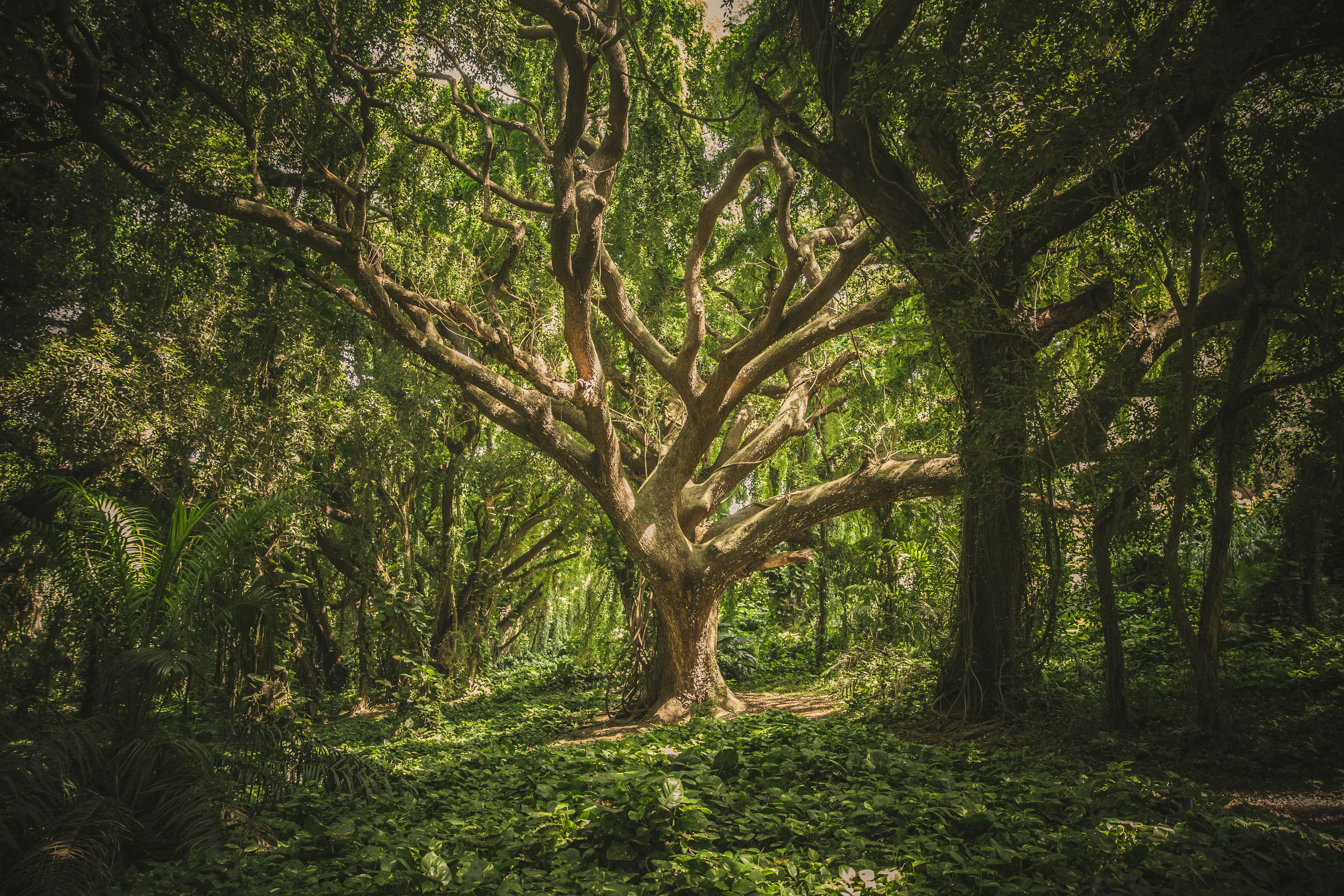
Forest bathing sounds like a euphemism for something unfashionable. It is not. The term is a direct translation of the Japanese phrase shinrin-yoku, coined in the 1980s to describe the practice of mindfully spending time under the canopy of trees. Japanese health authorities designated dozens of forests as official therapy sites and funded research into the physiological effects of slow immersion in wooded environments. What the research has found is surprisingly robust and difficult for skeptics to dismiss.
What Forest Bathing Actually Involves
Forest bathing is not hiking. It is not exercise. It is not a workout with a view. It is a deliberate slow engagement with a forest environment using all your senses. You walk slowly. You pause often. You look closely at bark, moss, leaves, and light. You listen for birds, wind, running water, and silence. You touch the textures of wood and plants. You notice smells. You breathe deeply.
The practice can last anywhere from twenty minutes to several hours. There is no destination. There is no goal beyond being present with the forest. This is a foreign concept in outdoor culture that often prizes mileage, elevation gain, and photographic achievement. Forest bathing asks you to slow down and do almost nothing.
The simplicity is part of what makes the practice accessible. You do not need special gear, skills, or fitness. Any park with trees works. Any person willing to slow down can participate. It is free, endlessly repeatable, and available to almost anyone who lives near green space.
What The Research Shows
Japanese and Korean researchers have produced a substantial body of work on the physiological effects of forest immersion. Consistent findings include lower blood pressure, lower pulse rate, lower cortisol levels, improved mood, reduced anxiety, and enhanced immune function.
Studies measuring natural killer cell activity, a marker of immune function, have found significant increases after forest walks that are not seen after equivalent urban walks. The effects persist for up to a month after a single forest trip in some studies. Researchers believe that compounds called phytoncides, volatile organic compounds released by trees as part of their own defense against microbes, may contribute to the immune enhancement. You breathe these compounds, and they influence your biology.
Cardiovascular effects are reliably measurable. A single forest walk drops blood pressure in people with elevated readings. Heart rate variability increases, reflecting improved autonomic balance. The sympathetic nervous system downshifts while the parasympathetic system activates.
Psychological findings are equally striking. Depression scores drop. Anxiety scores drop. Rumination, the repetitive negative thinking pattern that fuels many mental health problems, measurably decreases during and after forest immersion. Subjective feelings of calm, energy, and connection rise.
The Urban Contrast
Part of what makes forest bathing so effective may be contrast with the urban environment. Cities bombard the nervous system with constant inputs. Sounds from traffic, construction, and crowds. Visual complexity from signs, screens, and people. Air quality that falls below optimal. Electromagnetic fields at densities humans never evolved to tolerate. The nervous system is never given a chance to rest.
Forests offer a completely different sensory environment. Natural sounds are lower in volume and slower in tempo. Visual scenes are organized around fractal patterns that the human brain processes with ease and enjoyment. Air contains fewer pollutants and higher concentrations of beneficial phytoncides. The overall nervous system load drops substantially.
The modern human is not designed for constant urban input. We evolved in natural environments for hundreds of thousands of years before cities existed. The nervous system still expects that environment and suffers in its absence. Forest bathing is, in a sense, a return to the environment our physiology was built for.
The Simplicity Of Practice
You do not need a forest therapy guide, though trained guides exist and can deepen the experience for those interested. The basic practice requires only slowing down, leaving your phone silent, and engaging your senses.
Choose a location with trees. Any will do, though more biodiverse forests may offer richer experiences. Walk at a pace that feels unusually slow, perhaps half your normal walking speed. Pause often. Look at things closely that you would normally pass without noticing. Touch a tree trunk and notice its texture and temperature. Find a place to sit and stay for ten or fifteen minutes, letting the environment work on you.
A simple way to structure a session is to spend at least two hours. Shorter sessions work and produce effects, but the body seems to settle more deeply after the first thirty to sixty minutes. Extended immersion appears in research to produce stronger and more lasting effects than brief visits.
The Seasonal Dimension
Forests change dramatically through the seasons, and each season offers different experiences. Spring forests are alive with new growth, bird activity, and rising sap. Summer forests are dense, humid, and teeming with insect life. Autumn forests blaze with color and release a specific scent of decomposition that some people find deeply grounding. Winter forests are quiet, stark, and reveal the skeleton of the landscape in ways impossible to see when leaves are present.
Returning to the same forest across seasons builds familiarity that enhances the practice. You start to recognize individual trees. You notice subtle changes week to week. You develop a relationship with a particular patch of woods that is its own form of nourishment.
Who Benefits Most
Research suggests the benefits of forest bathing are most pronounced for people with elevated baseline stress, anxiety, or depression. Chronically stressed urban professionals often show the largest physiological changes after forest immersion. People recovering from illness or trauma often benefit disproportionately.
Children benefit enormously from unstructured time in forests, developing motor skills, problem-solving, and emotional regulation in ways screens and urban environments cannot match. The Scandinavian forest school tradition recognizes this with educational programs built around outdoor time in all weather.
Older adults benefit through gentle movement, social connection when done in groups, and the cognitive stimulation of novel natural environments. Forest therapy has been incorporated into dementia care programs in several countries with promising results.
The Phytoncide Question
The idea that breathing tree-produced chemicals influences human health is controversial in some scientific circles. The research is stronger for effects attributed to broader environmental factors than for specific chemical mechanisms. Still, laboratory studies have shown that exposure to concentrated phytoncides mimics some effects of actual forest time, suggesting the chemistry matters.
Phytoncide concentrations are higher in coniferous forests with pine, cedar, and cypress trees. They are highest on warm humid days when trees release more volatile compounds. Walking through a pine forest on a warm afternoon may maximize this particular benefit.
Whether or not you credit phytoncides specifically, the overall package of forest immersion effects is robust enough that debate about mechanisms does not change the practical conclusion. Spending time in forests is good for you.
Making It A Habit
Most people who try forest bathing once report a meaningful experience, then never do it again. They get swept back into the demands of work and screens. Building the habit requires intentionality.
Put a weekly forest session on your calendar. Treat it as non-negotiable. Start with a modest commitment, perhaps an hour on a Sunday morning. Find a location within a reasonable driving distance so logistics do not sabotage consistency.
Going alone is fine and has its own depth. Going with a friend or partner can be pleasant but requires agreement to honor the slower pace and reduced conversation. Group sessions with a trained guide can accelerate your comfort with the practice.
If you have access to a forest within walking distance of home, even fifteen minutes daily accumulates into meaningful benefit. Brief but frequent exposures may be as valuable as occasional long sessions.
Forest Bathing In Urban Environments
Not everyone has easy access to a forest. Urban parks, botanical gardens, and green corridors can provide many of the same benefits in scaled-down form. Research has found measurable effects even from time in modest urban green spaces compared to fully built environments.
If you cannot get to a forest, go to the nearest park. Sit on a bench among trees. Walk along a green corridor. Even looking at trees through a window has been shown to produce modest stress-reducing effects. Any increase in nature exposure seems to help.
Some workplaces have begun building indoor forests with real trees and plants. Hospitals are adding healing gardens. Schools are incorporating outdoor learning. The research on biophilic design is growing quickly and suggests that these interventions improve health, productivity, and mood in tangible ways.
The Broader Nature Connection
Forest bathing sits within a broader movement to reconnect modern humans with nature. Time in mountains, oceans, deserts, and rivers produces similar stress-reducing and mood-enhancing effects. The forest happens to have accumulated the most research because of its central role in Japanese culture, but the underlying principle applies broadly.
The term grounding or earthing describes direct physical contact with the earth. Walking barefoot on grass or sand may have measurable effects through changes in bioelectrical status. The research is less established than for forest bathing but is intriguing. At minimum, the experience of walking barefoot in nature is pleasant and connecting.
Blue space time, spent near rivers, lakes, or oceans, produces benefits similar to green space. The sound of water, the negative ions near waterfalls and waves, and the visual expanse of water all seem to contribute. Many people find blue space particularly restorative for depression and grief.
Technology Restraint
The phone is the enemy of forest bathing. Even carrying a silent phone in your pocket disrupts the full effect in subtle ways. The brain remains partially alert to notifications even when they are not arriving. True presence requires true disconnection.
Leave the phone in the car or in a backpack that stays closed. Resist the urge to photograph everything. The camera reflex interrupts the absorption that is the whole point. If you must bring the phone for safety, at least turn off all notifications and keep it completely out of sight.
The Long View
Forest bathing offers something our accelerated civilization badly needs. A slow, sensory, analog experience that asks nothing of you and gives something back. The practice is ancient in its essence, though its formalization is recent. Spending time in forests is part of how humans stay human.
Whether you approach it as a researched health intervention, a spiritual practice, or simply a pleasant way to spend a Sunday morning, the forest offers more than most modern wellness strategies. It costs nothing. It scales to any time commitment. It pairs well with the rest of a healthy life.
Find a forest near you. Go there regularly. Walk slowly. Sit often. Breathe. Listen. Touch. Look. Let the forest work on you. Over weeks and months and years, you will understand why the Japanese built a health movement around an experience so simple and so old.
Sources and Further Reading
Health and Beyond uses reputable medical and scientific sources where possible. These links support or expand on the topics discussed above.
- NIMH: Mental Health Topicsnimh.nih.gov
- MedlinePlus: Mental Healthmedlineplus.gov