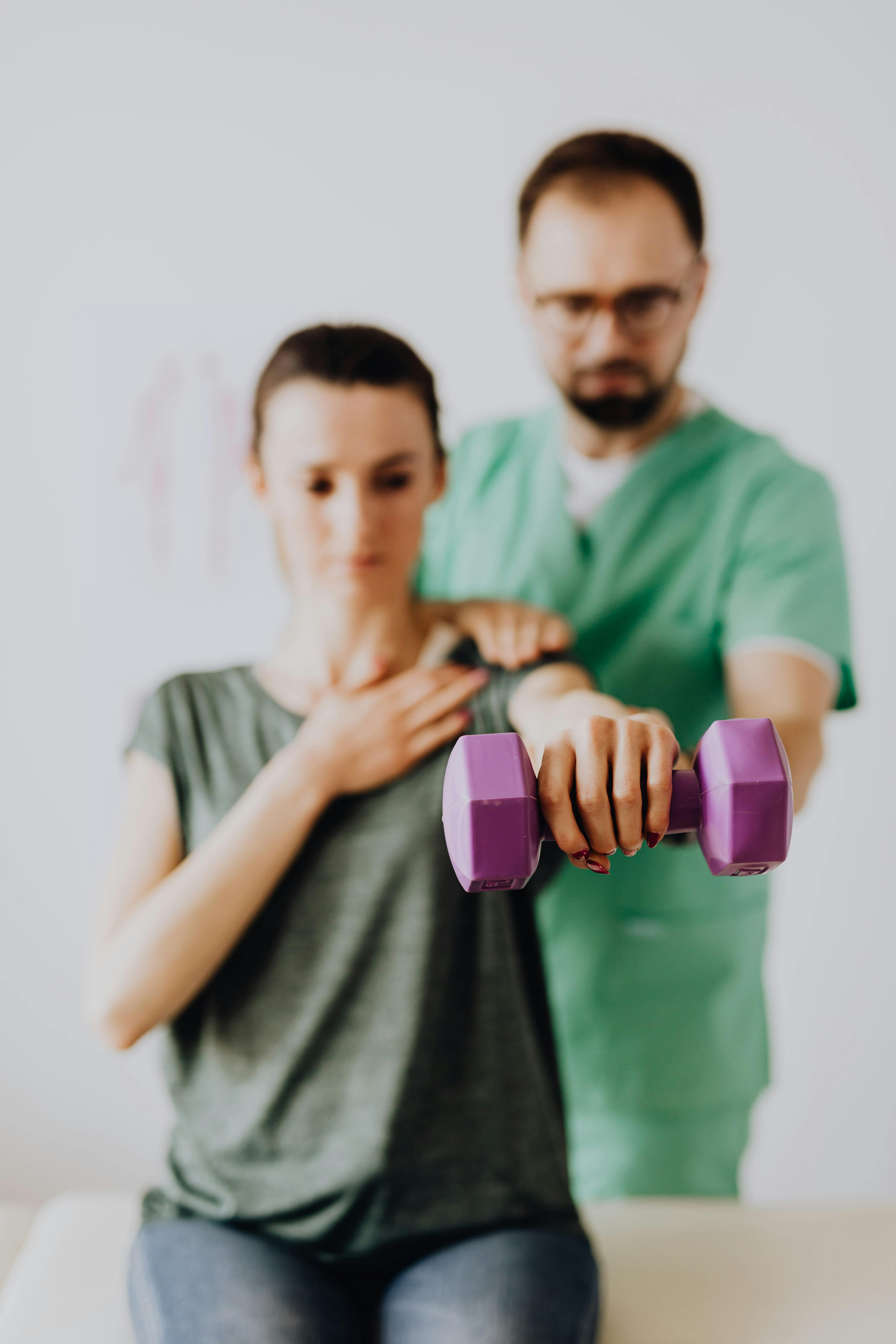
The knee is one of the most injured joints in the body, and most of the time the injury did not happen in the moment that people blame. The torn meniscus during a simple twist, the ACL that went during a routine jump, the cartilage that started complaining on the stairs one day, and the chronic patellofemoral pain that shows up for no obvious reason almost always trace back to longer term issues that set the stage. Weak hips, tight ankles, poor movement patterns, and loss of quadriceps strength accumulate over years before the knee finally gives out. Understanding this upstream and downstream context is what makes knee health work long term, rather than simply treating each problem as it appears.
The knee is sometimes called the joint stuck in the middle. It has limited movement of its own compared with the hip and ankle, which both rotate and move in multiple planes. The knee mostly flexes and extends, with a small amount of rotation available mainly when the knee is bent. This mechanical simplicity means the knee gets caught between what the hip and ankle fail to do well. When the hip will not rotate properly, the knee absorbs the rotational demands. When the ankle is stiff, the knee compensates during squatting, descending stairs, and the landing phase of running. Over time, the knee wears down from these compensations, and localized knee treatment without addressing the joints above and below rarely produces durable results.
What Holds the Knee Together
Four major ligaments stabilize the knee. The anterior cruciate ligament, ACL, prevents forward sliding of the tibia relative to the femur and controls rotation. The posterior cruciate, PCL, prevents backward sliding. The medial collateral ligament, MCL, stabilizes against inward bending forces on the outside of the knee. The lateral collateral, LCL, does the opposite. Each ligament has characteristic injury mechanisms, and the combination of which ligaments are intact shapes what the knee can safely do.
The menisci are two crescent shaped pieces of cartilage that sit between the femur and tibia, distributing load across the joint surfaces and contributing to stability. Meniscus tears are common, particularly with age, and many older adults have meniscus tears visible on imaging without any symptoms. Whether a tear matters clinically depends more on symptoms and function than on the image alone.
The articular cartilage that covers the ends of the bones in the knee is what wears down in osteoarthritis. Unlike muscle or ligament tissue, cartilage has poor blood supply and limited capacity to heal. Preserving what is there is easier than trying to restore it once lost, which is why attention to how the knee is loaded matters over decades.
The quadriceps muscles in the front of the thigh and the hamstrings in the back are the primary movers and dynamic stabilizers of the knee. Strong quadriceps, particularly the medial vastus that stabilizes the patella, correlate strongly with knee health across populations. Hamstring strength and balance with quadriceps strength also matters, particularly for ACL injury risk.
The Hip Connection
Research over the past twenty years has thoroughly established that many knee problems originate at the hip. The gluteus medius on the side of the hip is responsible for stabilizing the pelvis during single leg stance. Every step while walking, every time weight shifts from one foot to the other while standing, every descent of a step requires this muscle to work. When it is weak, the pelvis drops on the unweighted side, the thigh rotates inward relative to the knee, and the knee tracks in a pattern that stresses the patellofemoral joint and the medial compartment.
This pattern, often called dynamic knee valgus, shows up visibly as the knee drifting inward during squats, lunges, and single leg movements. Even without formal injury, years of this pattern cause progressive wear on specific areas of the knee. Addressing the hip weakness often resolves knee symptoms that have not responded to knee focused treatment.
The gluteus maximus, the main hip extensor, also matters. When it is weak, as happens in many people who sit for work, the quadriceps take on more of the work of standing up from seated, climbing stairs, and similar movements. The knee loads more heavily and the pattern tends to shift toward quadriceps dominance that strains the joint.
Strengthening exercises for these hip muscles, including side lying leg raises, clamshells, monster walks, bridges, hip thrusts, and single leg deadlifts, rebuild the support structure that the knee depends on. Most people notice knee improvements within weeks of consistent hip strengthening work, even if they have not changed anything specifically for the knee.
The Ankle Connection
Ankle dorsiflexion, the motion of pulling the foot up toward the shin, is essential for squatting, lunging, and running. Most people have less dorsiflexion than they need, often because of tight calves or joint restrictions. When dorsiflexion is limited, something has to give during these movements. Usually it is the knee, which caves inward or the heel, which lifts off the ground shifting load forward.
Testing ankle dorsiflexion is simple. Standing with one foot about a hands width from a wall, the knee should be able to touch the wall without the heel lifting. Most people cannot achieve this. Working on dorsiflexion through calf stretching, joint mobilization with a strap or band, and progressive loaded dorsiflexion in exercises like wall facing ankle rocks produces measurable improvements over weeks.
Beyond mobility, ankle stability matters. The foot is the base of the kinetic chain, and a foot that rolls or collapses changes the alignment of everything above it. The earlier article on foot health covers this in depth, but the knee specific point is that restoring foot and ankle function is often essential for knee rehabilitation to stick.
Common Knee Problems and Real Solutions
Patellofemoral pain, often called runners knee, is one of the most common knee issues, particularly in young active women. Pain around or behind the kneecap, worsened by squatting, stairs, and prolonged sitting, is the classic pattern. Imaging often looks normal. Treatment should focus on hip strengthening particularly glute medius, restoring ankle dorsiflexion, improving movement patterns, and gradually loading the knee to rebuild quadriceps strength without overloading the inflamed tissues. Most cases respond well over twelve to sixteen weeks of consistent work.
IT band syndrome, with pain on the outer side of the knee that is particularly bad during running, is similarly a hip issue most of the time. The iliotibial band is a passive structure that does not get tight on its own without underlying muscle imbalances. Addressing weak glutes, tight tensor fasciae latae, and movement patterns tends to resolve the issue more reliably than foam rolling the band itself.
Meniscus issues vary in their need for surgical intervention. Acute traumatic tears with mechanical symptoms like locking or catching often benefit from surgical management. Degenerative tears that occur gradually over time, particularly in people over forty, respond well to conservative management including rehabilitation, weight management, and sometimes targeted injections. The research on partial meniscectomy for degenerative tears has not shown better outcomes than physical therapy alone, and many surgeons have shifted practice accordingly.
Osteoarthritis of the knee affects many adults and is the endpoint of various paths including aging, previous injuries, and accumulated wear. Conservative management including strengthening, weight loss in overweight patients, appropriate activity modification, and sometimes injections can substantially improve symptoms and delay the need for joint replacement. Running, contrary to common fears, does not accelerate knee osteoarthritis in research, and active runners tend to have better knee outcomes than sedentary peers. What matters is cumulative load management and the presence of good muscle support, not the activity itself.
ACL injuries are the most serious common knee injury, and their management is a balance of individual factors. Surgery is often recommended for younger active people who want to return to cutting sports. Conservative management with thorough rehabilitation works well for many people who do not plan aggressive sport activity, and the research is more supportive of this approach than it used to be. Regardless of surgical decision, rehabilitation for six to twelve months is essential.
The Training Approach
Building durable knee health involves strengthening the muscles around the knee along with the hip and ankle support structures. Specific exercises that matter include single leg squats or pistol squat progressions for balance and unilateral strength, step ups for functional loading, split squats and lunges for dynamic stability, lateral band walks for hip abduction, and various direct quadriceps and hamstring work.
Progression matters. Starting with lower loads and higher repetitions builds tissue tolerance and movement quality. Adding load gradually, challenging stability progressively with single leg work and unstable surfaces, and eventually including jumping and landing work for people who need that capacity, produces robust knees over time.
The common mistake is either avoiding loading the knee entirely for fear of damage or aggressively loading through pain in the belief that pushing through builds strength. Neither approach works well. Gradual progressive loading, modified in response to symptoms, is what builds durability.
What to Avoid
Chronic use of anti inflammatory medications to mask knee pain so that activity can continue without addressing the underlying cause is a path that leads to worse outcomes over years. The pain is information. Suppressing it while continuing to load tissues that are not ready for the load eventually produces more significant damage.
Braces beyond short term post injury use often make knees worse in the long run by allowing the supporting muscles to weaken. Functional bracing during specific sport activity is different and has a role in certain situations.
Stretching the IT band or quadriceps as a primary strategy for knee pain usually does not produce lasting benefit. Addressing the underlying strength and mobility imbalances produces better results than trying to stretch tissues that are responding to dysfunction elsewhere.
Cortisone injections can provide short term relief for arthritis pain but should not be used frequently because repeated injections weaken the surrounding tissues and accelerate joint damage. Most guidelines recommend no more than three to four injections per year.
The Long View
Knee health is built over decades through the same consistent attention that supports most of the musculoskeletal system. Regular strength training that includes leg work. Adequate mobility in the hips and ankles. Reasonable body weight. Good movement patterns during daily activities. Protein sufficient to support muscle maintenance. Sleep adequate for tissue recovery.
Most knee problems that develop in midlife and beyond are preventable or at least delayable through this kind of ongoing attention. Most problems that do develop are more manageable than catastrophic, with good conservative care producing substantial improvements in most cases. The image of knee problems as inevitable with age, requiring surgery and acceptance of limitation, is more pessimistic than the evidence supports. Knees respond well to being treated thoughtfully, and thoughtful treatment starts with understanding what the knee actually is and what it actually needs.
Sources and Further Reading
Health and Beyond uses reputable medical and scientific sources where possible. These links support or expand on the topics discussed above.
- NIAMS: Bones, Joints, and Musclesniams.nih.gov
- MedlinePlus: Back Painmedlineplus.gov