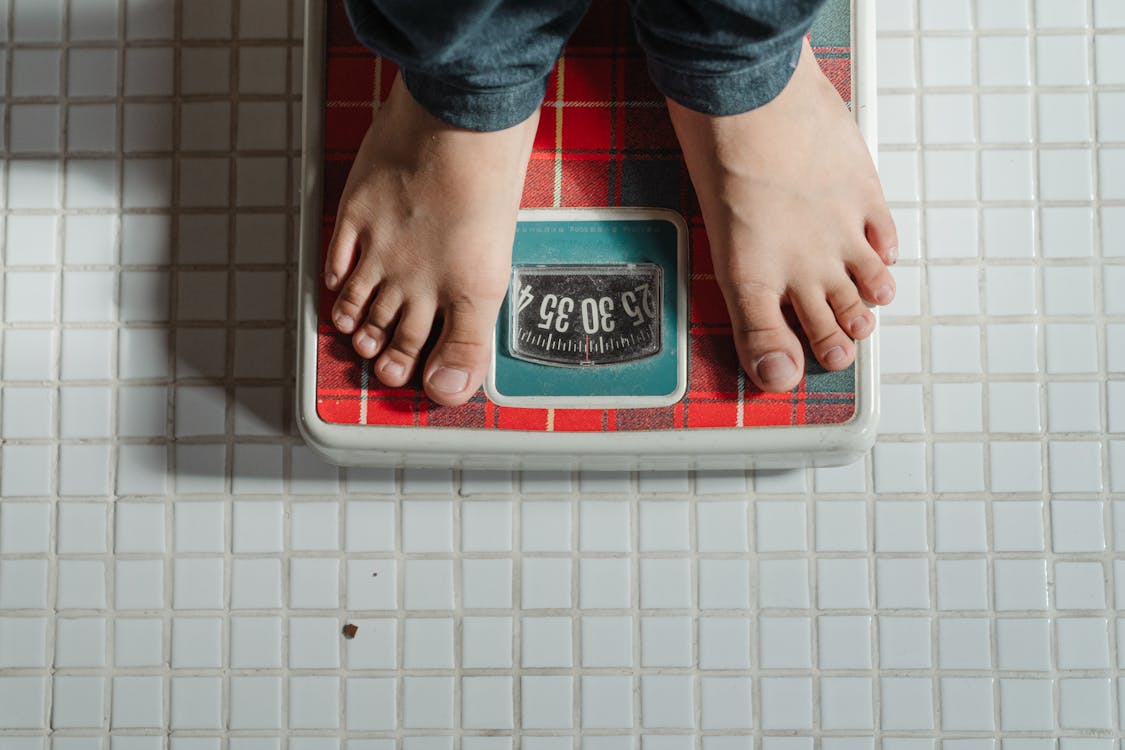
Every successful fat loss story — regardless of the specific diet followed — shares one common denominator: a calorie deficit. Whether someone lost weight on keto, intermittent fasting, paleo, Weight Watchers, veganism, or simply eating smaller portions, the underlying mechanism was the same. They consumed fewer calories than their body burned, forcing it to tap into stored energy (body fat) to make up the difference.
This fundamental principle of energy balance is not a theory or a diet trend. It is a law of thermodynamics applied to biology, confirmed by decades of metabolic research and every rigorously controlled weight loss study ever conducted. The National Institute of Diabetes and Digestive and Kidney Diseases confirms that caloric intake relative to expenditure is the primary determinant of weight change.
The concept sounds simple, but execution is where most people struggle. Cut calories too aggressively and you lose muscle, crash your metabolism, feel miserable, and regain everything. Cut too little and progress is imperceptibly slow, leading to frustration and abandonment. This guide teaches you to find the sweet spot — a moderate calorie deficit that burns fat efficiently while preserving muscle, maintaining energy, and setting you up for long-term success.
Understanding Energy Balance
Your body burns calories through four primary mechanisms, collectively called Total Daily Energy Expenditure (TDEE).
Basal Metabolic Rate (BMR) accounts for 60 to 75 percent of total calorie burn. This is the energy your body requires to maintain basic life functions — breathing, circulating blood, maintaining body temperature, repairing cells, and supporting brain function — while at complete rest. BMR is largely determined by your lean body mass (muscle), age, sex, and genetics.
The Thermic Effect of Food (TEF) accounts for approximately 10 percent of total calorie burn. This is the energy required to digest, absorb, and process the food you eat. Protein has the highest thermic effect (20 to 30 percent of calories consumed), followed by carbohydrates (5 to 10 percent) and fat (0 to 3 percent).
Non-Exercise Activity Thermogenesis (NEAT) encompasses all movement that is not structured exercise — walking, fidgeting, standing, carrying groceries, playing with your kids, and doing household chores. NEAT varies enormously between individuals and can account for 15 to 30 percent of total expenditure. Highly active people who walk extensively and remain on their feet throughout the day may burn 500 to 1,000 additional calories through NEAT compared to sedentary individuals.
Exercise Activity Thermogenesis (EAT) accounts for the calories burned during deliberate exercise. For most people, this is a smaller component than they expect — a vigorous 45-minute workout might burn 300 to 500 calories, which represents only about 15 to 20 percent of total daily expenditure.
A calorie deficit exists when total calorie intake falls below TDEE. A surplus exists when intake exceeds TDEE. A deficit of approximately 3,500 calories over time corresponds to roughly one pound of fat loss, though this number is a simplified estimate that varies between individuals.
Calculating Your Calorie Needs
Step one is estimating your TDEE. The most practical approach uses the Mifflin-St Jeor equation to estimate BMR, then multiplies by an activity factor.
For men: BMR = (10 × weight in kg) + (6.25 × height in cm) − (5 × age in years) + 5. For women: BMR = (10 × weight in kg) + (6.25 × height in cm) − (5 × age in years) − 161.
Multiply your BMR by your activity factor: sedentary (desk job, minimal movement) = 1.2; lightly active (light exercise one to three days per week) = 1.375; moderately active (moderate exercise three to five days per week) = 1.55; very active (hard exercise six to seven days per week) = 1.725; extremely active (very hard exercise, physical job) = 1.9.
For example, a 40-year-old woman who weighs 170 pounds (77 kg), stands 5 foot 6 inches (167 cm), and is moderately active would calculate: BMR = (10 × 77) + (6.25 × 167) − (5 × 40) − 161 = 770 + 1,044 − 200 − 161 = 1,453 calories. TDEE = 1,453 × 1.55 = approximately 2,252 calories per day.
These formulas provide estimates. Actual TDEE varies based on genetics, body composition, hormonal status, and other factors. Use the calculation as a starting point and adjust based on real-world results over two to four weeks.
The Optimal Deficit Size
Research and clinical experience point to a moderate deficit of 300 to 500 calories below TDEE as the optimal range for sustainable fat loss with minimal muscle loss and metabolic adaptation.
A 500-calorie daily deficit produces roughly one pound of fat loss per week — a rate that is achievable, sustainable, and associated with better long-term weight maintenance than faster loss rates. More aggressive deficits (750 to 1,000 calories or more) produce faster scale weight changes but at significant costs: greater muscle loss, more severe metabolic adaptation, reduced energy and cognitive function, hormonal disruption (particularly thyroid and reproductive hormones), and higher likelihood of binge eating and weight regain.
For our example above, this woman would aim for 1,752 to 1,952 calories daily (TDEE of 2,252 minus 300 to 500).
People with more body fat to lose can typically sustain slightly larger deficits initially (up to 750 calories) because their bodies have larger energy reserves to draw from. Leaner individuals should use smaller deficits (250 to 300 calories) to minimize muscle loss.
Protecting Muscle During a Deficit
Muscle preservation during weight loss is not optional — it is essential. Muscle tissue is metabolically active, burning calories at rest and providing the strength and function your body needs. Losing significant muscle during dieting lowers your BMR, making continued fat loss harder and weight regain easier. The goal is to lose fat while retaining as much muscle as possible.
Protein Intake
High protein intake is the single most important dietary factor for muscle preservation during a calorie deficit. Aim for 0.7 to 1.0 grams of protein per pound of body weight daily (1.6 to 2.2 grams per kilogram). For our example woman at 170 pounds, this means 119 to 170 grams of protein per day.
Protein preserves muscle through several mechanisms: it provides the amino acids needed for muscle protein synthesis (the repair and growth process), it has the highest thermic effect of any macronutrient (burning more calories during digestion), it is the most satiating macronutrient (keeping you fuller longer on fewer calories), and research from the American Journal of Clinical Nutrition consistently demonstrates that higher protein intake during energy restriction preserves lean mass while favoring fat loss.
Distribute protein across three to four meals throughout the day, with each meal containing 25 to 40 grams. This distribution pattern optimizes muscle protein synthesis better than concentrating protein in one or two meals.
Resistance Training
Resistance training (weight lifting, bodyweight exercises, resistance band work) provides the stimulus that signals your body to retain muscle tissue during a calorie deficit. Without this signal, the body treats muscle as expendable and preferentially breaks it down for energy — a survival mechanism that was useful during ancestral famine periods but sabotages modern dieting efforts.
Train each major muscle group at least twice per week with moderate to heavy loads. You do not need to spend hours in the gym — three to four resistance training sessions of 30 to 45 minutes, focusing on compound movements (squats, deadlifts, presses, rows, pull-ups), provides sufficient stimulus to preserve muscle.
Expect strength to plateau or slightly decrease during a prolonged deficit. This is normal and does not necessarily indicate muscle loss — reduced energy availability affects performance before it affects muscle mass. Maintain training intensity (weight on the bar) even if you need to reduce volume (total sets) slightly.
Avoiding Metabolic Adaptation
Your body does not want to lose weight. From an evolutionary perspective, stored body fat is a survival asset, and your metabolism will fight to preserve it. As you lose weight and maintain a calorie deficit, several adaptive mechanisms activate.
BMR decreases as you lose body mass (less tissue to maintain means less energy required). Hormonal changes reduce thyroid hormone output (slowing metabolism), increase ghrelin (the hunger hormone), and decrease leptin (the satiety hormone). NEAT unconsciously decreases — you fidget less, move less spontaneously, and choose easier movement options without realizing it.
These adaptations mean that the calorie intake that produced a deficit at the beginning of your diet may produce maintenance or even a surplus after several weeks of weight loss. This is the primary reason weight loss stalls.
Strategies to mitigate metabolic adaptation include periodic diet breaks (one to two weeks at maintenance calories every eight to twelve weeks), refeed days (one to two days per week at maintenance calories with extra carbohydrates, which temporarily boost leptin and thyroid output), maintaining high NEAT through deliberate daily step targets (8,000 to 10,000 steps), and avoiding excessively low-calorie intakes that trigger severe metabolic downregulation.
Tracking and Adjusting
Monitor your progress using multiple metrics rather than relying solely on scale weight. Body weight fluctuates by two to five pounds daily based on water retention, sodium intake, carbohydrate intake, bowel contents, and hormonal shifts. Weigh yourself daily at the same time (morning, after using the bathroom, before eating or drinking) and track the weekly average. A downward trend in weekly averages of 0.5 to 1.0 percent of body weight per week indicates appropriate fat loss.
Body measurements (waist circumference, hip circumference, chest, arms, thighs) provide additional data that the scale cannot. You may be losing fat and gaining muscle simultaneously — the scale will not show progress, but the tape measure and mirror will.
Progress photos taken monthly under consistent conditions (same lighting, same clothing, same pose) provide visual evidence of body composition changes that are difficult to perceive in the mirror day to day.
If weight loss stalls for three or more weeks (using weekly averages, not day-to-day fluctuations), first verify that you are accurately tracking intake — underreporting calories is extremely common and is the most frequent cause of apparent plateaus. If tracking is accurate, reduce calories by an additional 100 to 200 per day or increase daily step count by 1,000 to 2,000 steps.
Common Mistakes
Cutting calories too aggressively too soon leaves no room for adjustment when progress inevitably slows. Start with the smallest deficit that produces measurable results and reduce further only when necessary.
Neglecting protein leads to muscle loss, which lowers metabolic rate and produces a "skinny fat" appearance even at a lower body weight. Protein is the non-negotiable macronutrient of a fat loss diet.
Relying on exercise alone for the deficit rarely works because exercise burns fewer calories than most people think, and appetiteregulation often compensates by increasing hunger. Use exercise for health, muscle preservation, and small contributions to the deficit — use dietary adjustments for the primary deficit.
Eliminating entire food groups unnecessarily leads to feelings of deprivation and eventual binge episodes. No food is inherently "fattening" — foods only contribute to weight gain when they cause total calorie intake to exceed expenditure. A flexible approach that fits your favorite foods within your calorie target in appropriate portions is more sustainable than rigid food rules.
The Long Game
Sustainable weight loss is not a sprint. A moderate calorie deficit maintained consistently over months produces lasting body composition changes that crash diets never achieve. The person who loses one pound per week for thirty weeks transforms their body fundamentally — 30 pounds of fat lost while preserving the muscle that keeps their metabolism humming and their body functional.
Patience is not just a virtue in fat loss — it is a strategy. The slower and more methodically you lose weight, the more muscle you preserve, the less your metabolism adapts, the less deprived you feel, and the more likely you are to maintain your results permanently. The calorie deficit is not a punishment. It is a tool — and like any tool, its effectiveness depends entirely on how skillfully you use it.
Sources and Further Reading
Health and Beyond uses reputable medical and scientific sources where possible. These links support or expand on the topics discussed above.
- National Institute of Diabetes and Digestive and Kidney Diseasesniddk.nih.gov
- American Journal of Clinical Nutritionncbi.nlm.nih.gov